HMRC Enquiries and Investigations
Revised and up to date for 2025/26. Mistakes with HMRC enquiries and investigations can cost you more than just money. This course looks at how HMRC handle routine enquiries into self-assessment returns, through to full blown investigations into a taxpayer’s affairs.
£100 +VAT


HMRC Enquiries and Investigations
£100 +VAT
HMRC Enquiries and Investigations
This course is not currently available. To find out more, please get in touch.
This course will enable you to
- Deal with HMRC enquiries and investigations
- Understand HMRC’s powers, the different types of investigations and why an investigation might be opened
- Negotiate a settlement, and mitigate penalty charges
- Be clear about the difference between tax avoidance and evasion
- Understand why HMRC might start a criminal investigation, and the powers and safeguards under which they must operate
About the course
HMRC enquiries and investigations are not to be taken lightly. They are an important part of your role as a finance professional, and mistakes can cost both you, your company or your clients, more than just money.
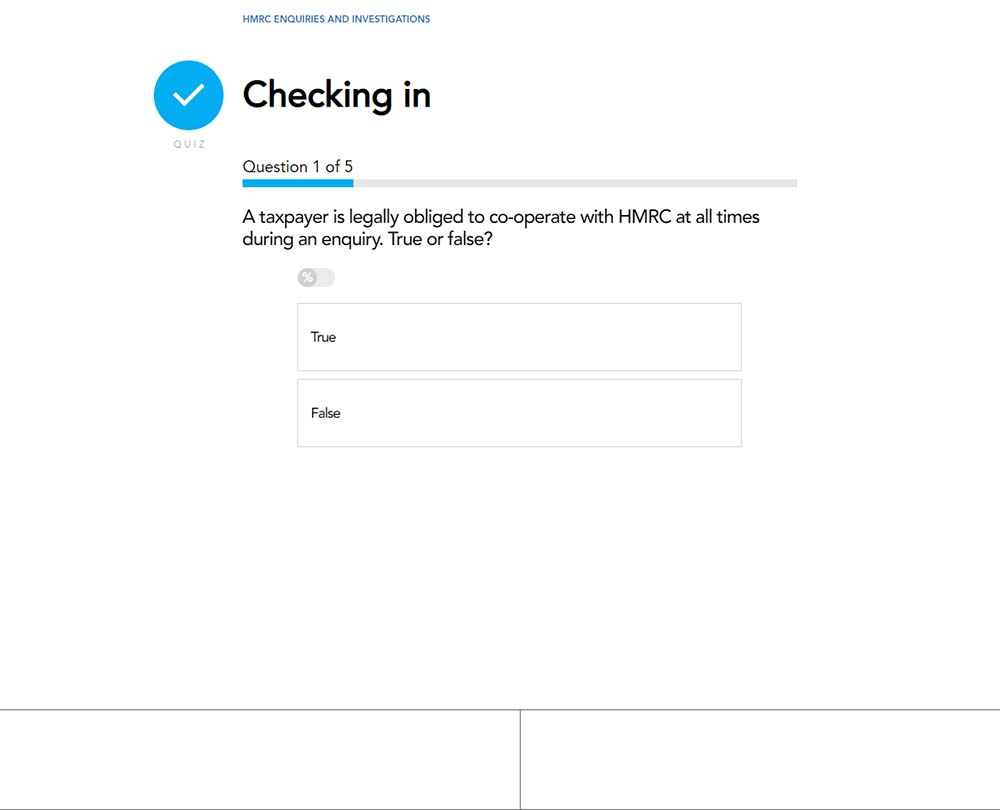
This course looks at how HMRC handle routine enquiries into self-assessment returns, through to full blown investigations into a taxpayer’s affairs. It outlines current law and practice, and guides participants through HMRC procedures, pinpointing the role and responsibilities of the taxpayer, and their agent.
Please Note: This course is only relevant to the UK
Contents
HMRC’s enquiry powers
The types of enquiry
The importance of HMRC’s enquiry powers
Under further examination
Opening an enquiry
The time frame for opening an enquiry
Cause for concern
Reducing the risk
Tax avoidance and evasion
The difference between evasion and avoidance
Tax evasion: explained
The general anti-abuse rule
Dealing with tax fraud and criminal investigations
The Contractual Disclosure Facility
Practical aspects
How to handle an enquiry
During an enquiry
Calculating penalties
Negotiating a settlement
Alternative Disclosure Resolution (ADR)
Criminal investigations
How to handle a criminal investigation
Instigating criminal proceedings
HMRC’s investigation powers
Using HMRC’s criminal powers
Time limits for complaints
How it works
Author

Sarah Laing
Sarah is a Chartered Tax Accountant (CTA) and a member of the Chartered Institute of Taxation (CIOT). Sarah currently works as a freelance tax author providing technical writing services to the tax and accountancy professions.
You might also like
Take a look at some of our bestselling courses