Owner Managed Businesses
Revised and up to date for 2025/26. With the number of owner managed businesses on the rise, clients will expect you to be familiar with the complex rules. This course guides you through the tax, incorporation, and income issues that arise at each stage of a business’s life.
£100 +VAT


Owner Managed Businesses
£100 +VAT
Owner Managed Businesses
This course is not currently available. To find out more, please get in touch.
This course will enable you to
- Get to grips with the basics of owner managed businesses (OMBs)
- Handle issues related to business growth such as capital expenditure and VAT registration
- Advise on when and how incorporation becomes a sensible option
- Ensure your clients generate profit in a tax efficient way
- Offer support on whether to sell a business or pass it on to the “next generation”
About the course
There has been a significant increase in the number of owner managed businesses (OMBs) in recent years. Whether sole traders, limited companies or partnerships, these businesses face complex rules around setup, growth, and eventual exit. As accountants, it’s our role to guide clients through these challenges — from tax efficiency and incorporation decisions to succession planning.
This course provides a comprehensive overview of OMBs, covering tax considerations, incorporation, income structuring, and business exit strategies. You’ll explore the key issues that arise at different stages of the business life cycle, including capital expenditure, VAT registration, profit extraction, and disposal options.
By completing this course, you’ll be equipped to support your clients more confidently and strategically — helping them structure their business for growth, reduce tax liabilities, and make informed decisions about selling or passing on their business.
Please Note: This course only covers regulation in the United Kingdom

Contents
Overview
Explaining tax for owner managed businesses
What is an OMB?
Creating an OMB
Trade vs business
The early years
The early days of a business
HMRC registration
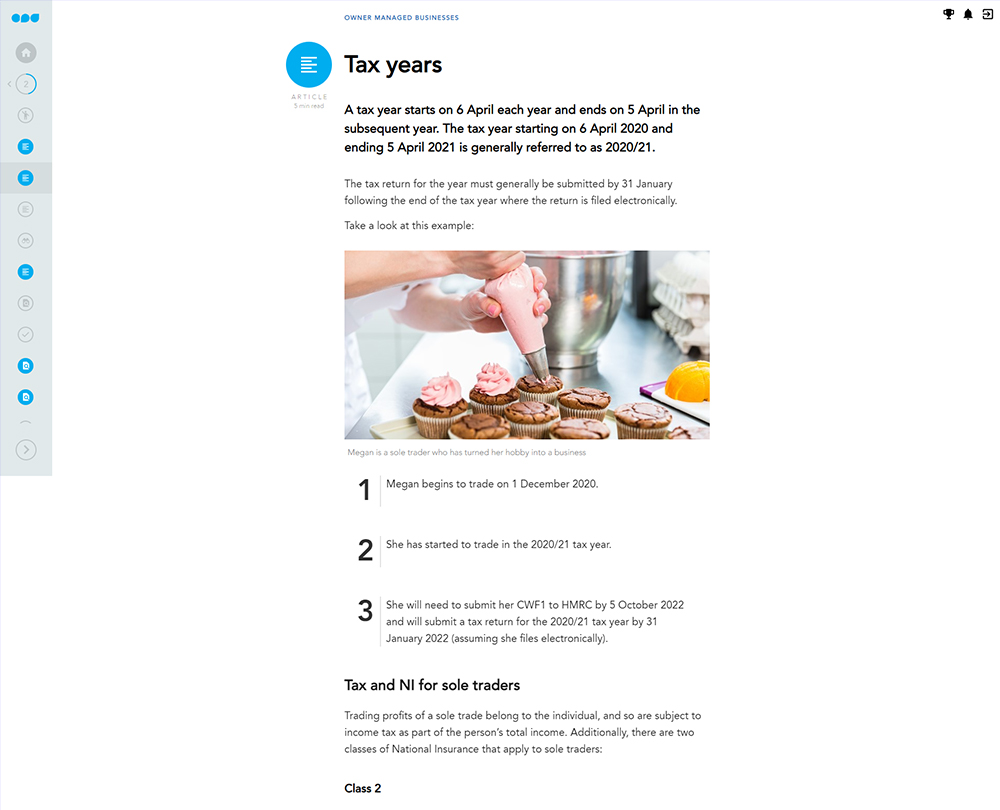
Tax years
Working out the profits
Business expenditure
Reporting
Growth
Key steps for company growth
Capital expenditure
Annual investment allowance
Working out AIA
The VAT system
VAT sales and invoices
VAT returns and penalties
Incorporation
In good company
The advantages of trading as a limited company
Corporation tax
To incorporate or not?
The incorporation process
Option 2: Holdover relief route
Option 3: Sale to the company
Profit extraction
Who profits?
Extracting profit from your business
Salary v dividends
Salary first
Other methods are available!
Directors’ loan accounts
Selling the business
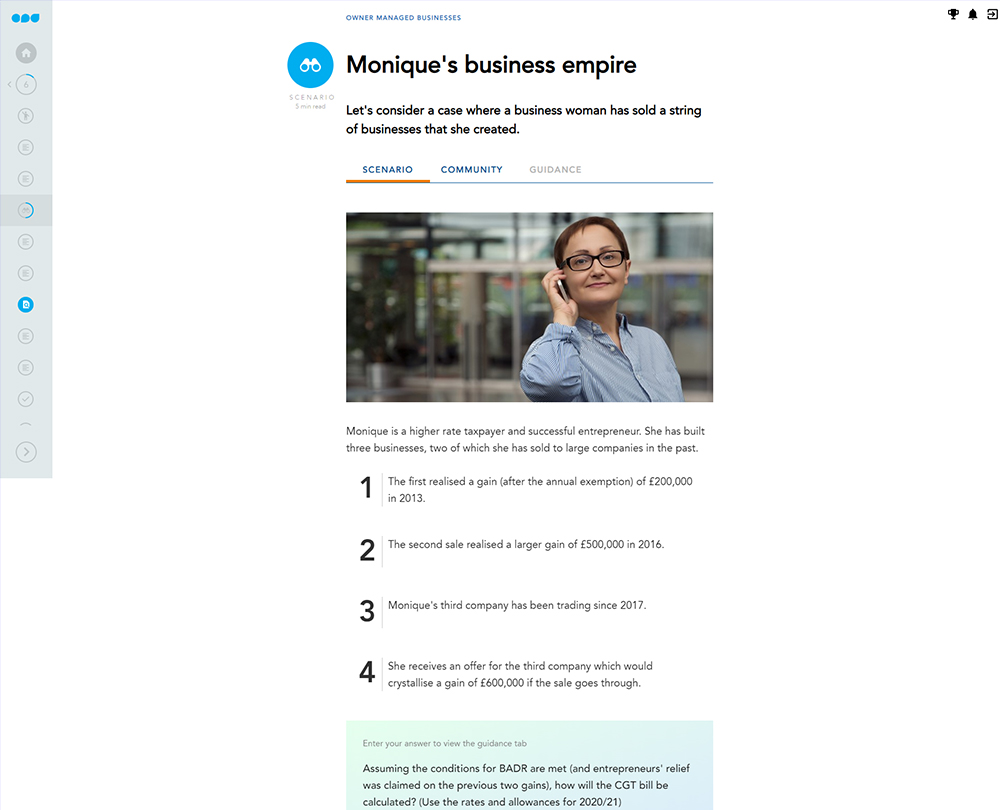
An offer too good to resist
Key issues when selling a business
Selling the company business
The base cost
Personally owned assets
What if the proceeds aren’t wholly upfront cash?
Potential tax savings
Passing the business on
The business as a legacy
Passing on to a new generation
IHT and lifetime transfers
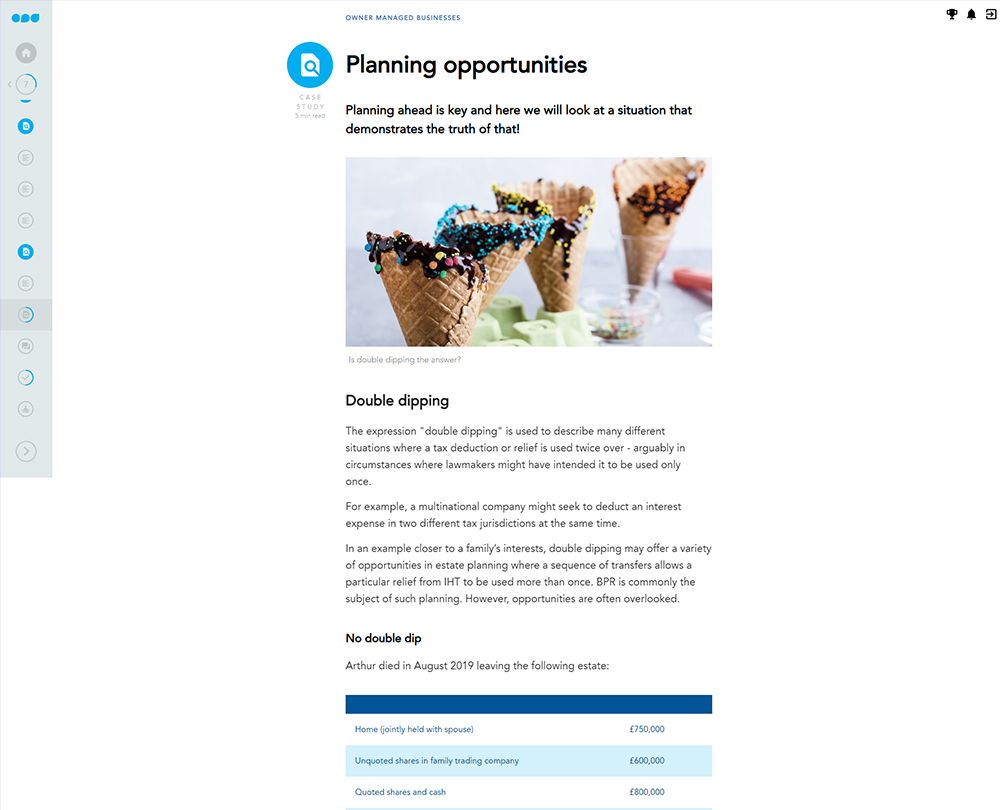
Business property relief
Qualifying for BPR
Problems with loans
How it works
Author

Andy Rainford
Andrew Rainford BA (Hons), ATT, CTA trained and qualified with an independent London firm of accountants, and subsequently worked on EY’s personal tax consultancy team.
Now based in North Wales, he runs his own tax consultancy and writing business, Red Dragon Consulting, working directly for private clients and also supporting other tax advisers.
You might also like
Take a look at some of our bestselling courses