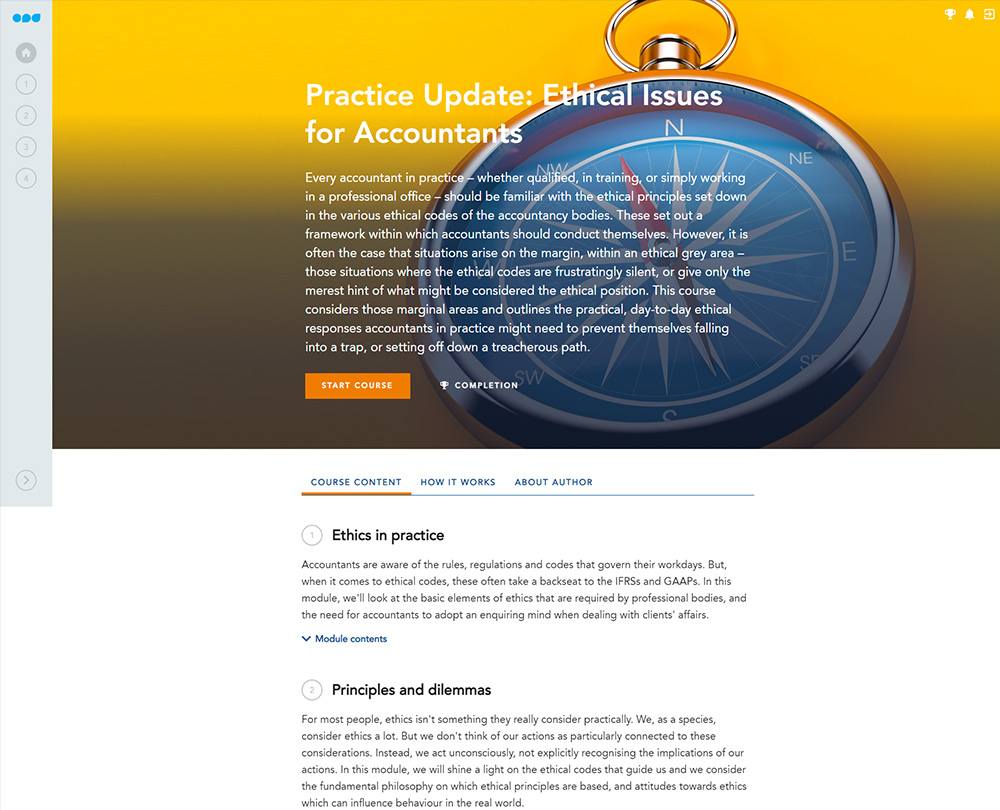
Practice Update: Ethical Issues for Accountants
Revised and up to date for 2025. Accountants in practice frequently face morally complex situations that leave you questioning the correct action to take. This course explores common ethical grey areas, when to apply professional judgement to your decisions and how your practice can maintain an ethical culture.
£100 +VAT


Practice Update: Ethical Issues for Accountants
£100 +VAT
Practice Update: Ethical Issues for Accountants
This course is not currently available. To find out more, please get in touch.
This course will enable you to
- Develop a thorough understanding of the key elements of the ethical codes required by professional bodies.
- Apply the ethical frameworks to help you make good decisions in difficult situations.
- Balance your duty to your client with your duty to society when providing tax advice.
- Build an ethical culture within your practice.
About the course
It’s vital that every accountant in practice should be familiar with the principles set down in the various ethical codes of the accountancy bodies. The reputation of a firm may be impacted by our capacity to stay objective, moral, and honest in our work. However, when ethical grey areas do arise, finding the right course of action from these codes isn’t always simple.
This course considers such ethical grey areas and provides accountants in practice with the practical, day-to-day approaches they need to avoid making unsafe decisions. You will employ codes of professional conduct to fulfil your role, including when providing advice on taxation matters. You’ll gain an understanding of the role of ethics in the workplace and how to establish an ethical culture in your practice.
Please Note: This course covers some UK only regulations

Contents
Ethics in practice
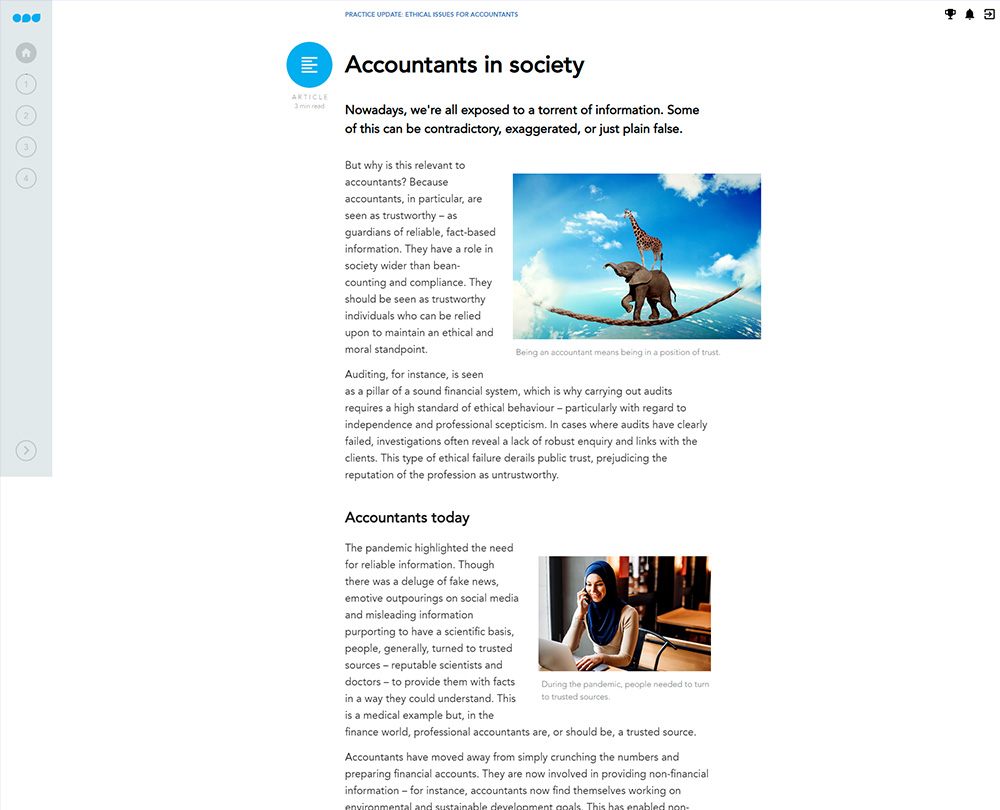
Accountants in society
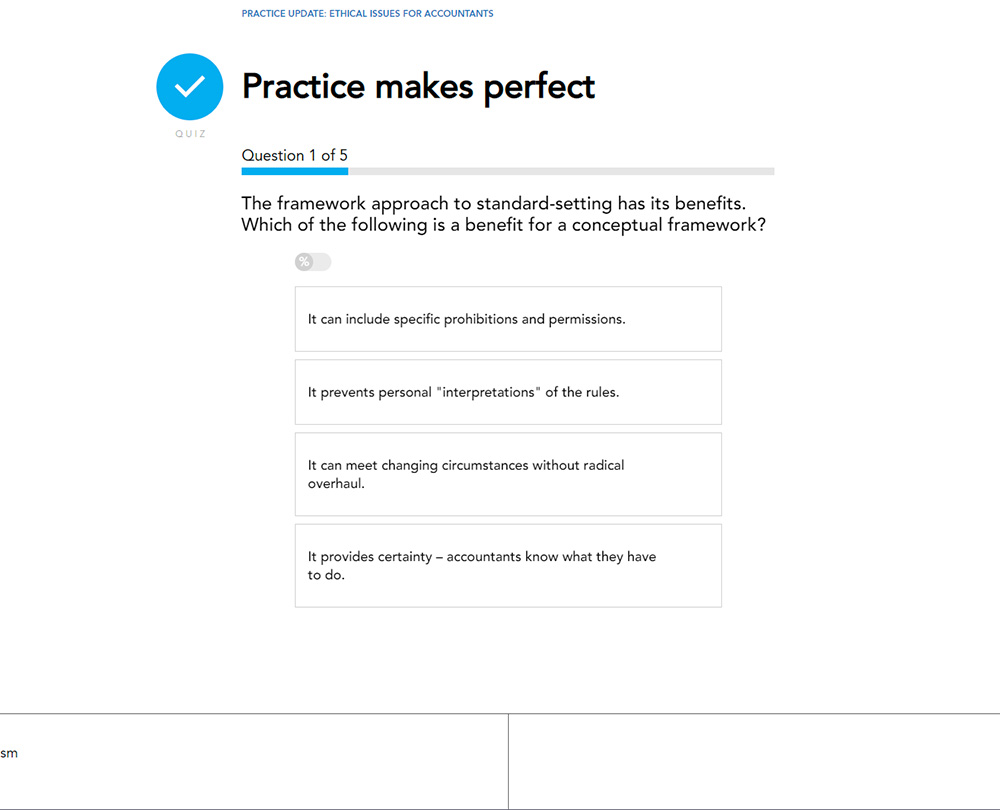
How frameworks work
The framework approach
Sticking to principles
Ethical codes and accountancy bodies
Recognising ethical threats
Types of ethical threat
The deep end of dependence
Professional scepticism
Principles and dilemmas
Ethical challenges
The theory of ethics
Dealing with dilemmas
Proximity
Culture clash
Normalisation of deviance
Being normalised
Socialising unethical behaviour
Tax and ethics
Professional conduct in relation to taxation
The role of the tax advisor
Does tax avoidance exist?
The law
The PCRT ethical principles
The relevant standards
Helpsheets
Professional judgement
Simplicity vs complexity
NOCLAR provisions
Creating an ethical culture
The tone at the top
The basis of an ethical culture
The hidden aspects of corporate culture
Normalisation
Poor communication
Building an ethical compliance culture
Developing an ethical culture
Compliance risk management
Policies and procedures
Ethics and HR
Maintaining an ethical culture
Performance appraisals
How it works
Author

John Taylor
John is a Chartered Accountant who has spent many years advising small and medium-sized businesses across the North of England. John is the author of two industry standard textbooks: Millichamp – Auditing and Forensic Accounting. He has also written several auditing textbooks for AAT courses.
You might also like
Take a look at some of our bestselling courses