US GAAP: A Guide for Non-US GAAP Users
US GAAP is a key area of financial reporting, not only because the USA is the world’s largest economy, but it’s a framework used by many global corporations. Familiarise yourself with its principles, standards, and its comparisons with IFRS, in this course.
£100 +VAT

US GAAP: A Guide for Non-US GAAP Users
£100 +VAT
US GAAP: A Guide for Non-US GAAP Users
This course is not currently available. To find out more, please get in touch.
This course will enable you to
- Compare the accounts of companies reporting under different regulatory regimes
- Understand the rules of US GAAP and how they compare to the principles-based IFRS system
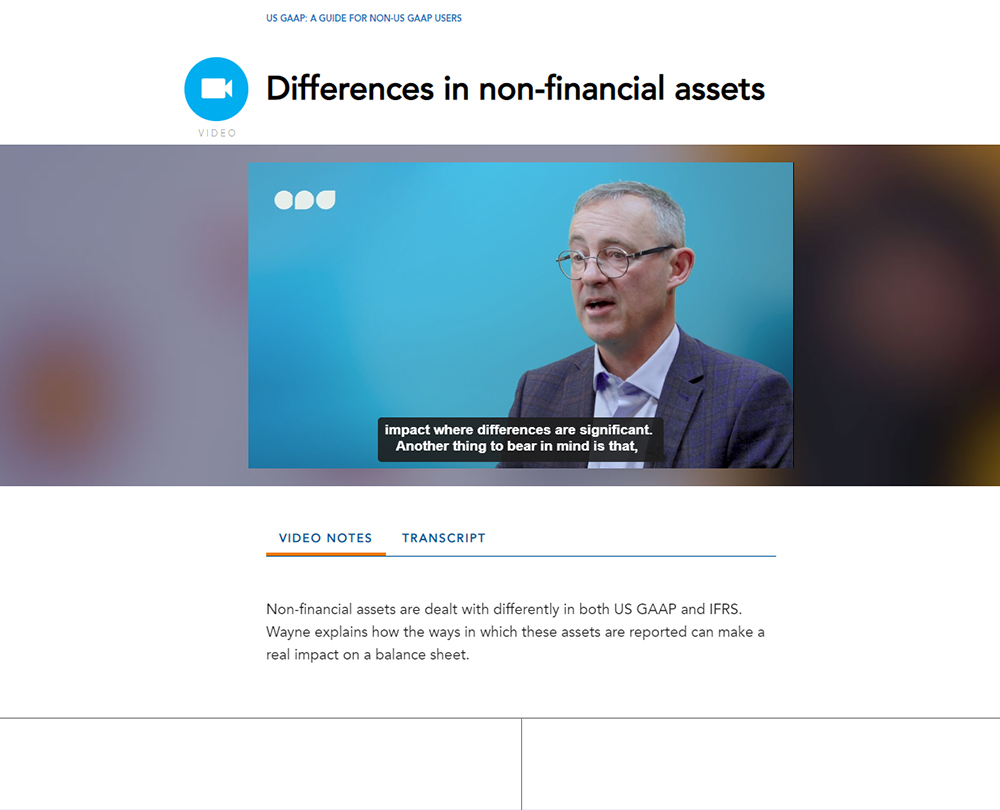
- Recognise the differences in the accounting treatment applied to non-financial assets under US GAAP and IFRS
- Appreciate and general similarity of approach accounting for revenue and expenditure under US GAAP and IFRS
- Familiarise yourself with the appropriate standards for accounting for financial instruments and business combinations
About the course
The USA has the world’s largest economy and is home to a range of global corporations. Having an understanding of US GAAP and how it compares to IFRS is a must for financial reporting.
Perhaps you report internationally under IFRS but have operations in the USA that also need a US GAAP report. Maybe you compete with companies reporting under US GAAP and need to know how to answer difficult questions about how your IFRS report compares. You could even be an analyst needing to compare the accounts of different companies with different regimes.
This course will provide you with a detailed overview of US GAAP. You’ll discover its underlying principles as well as how it compares to the IFRS framework. You’ll become familiar with the processes and standards needed to account for non-financial assets, revenue, financial instruments, and business combinations under US GAAP.


Contents
Key aspects
The importance of knowing
Governance arrangements
Financial statements
Spot the difference
The structure
Industry specific standards
Convergence
Accounting for non-financial assets
Differences in non-financial assets
Property, plant and equipment
Accounting for a PPE asset
Depreciation rules
Impairment rules
Differences in intangible assets
Intangible assets
Research and development
Leasing
Operating activities
The spirit of cooperation
Revenue recognition
Key methodology employed by ASC 606
Differences in inventory
Inventory
Provisions and contingencies
Expenditure
Financial instruments and business combinations
Financial instruments
More in common than you’d think
Fair values
Debt and equity investments
Impairments and financial instruments
Business combinations
Acquisitions
Goodwill
Consolidation
Equity accounting
How it works
Author

Wayne Bartlett
Wayne is an internationally acclaimed speaker and trainer on all aspects of public and private sector accounting and auditing standards. He has been instrumental in helping to develop the profession internationally and has taken lead roles in the development of new professional bodies and the accounting profession in Mozambique and Rwanda, and been extensively involved in developing financial reporting in many countries across the globe.
You might also like
Take a look at some of our bestselling courses