Agility in Finance
What does ‘agile’ really mean for finance? This course shows you how to apply hands-on agile practices to improve processes, drive value, and support business agility.
£100 +VAT

Agility in Finance
£100 +VAT
This course will enable you to
- Identify how agile thinking can benefit both you and your organisation
- Understand how finance can collaborate effectively across the business
- Apply agile principles to budgeting, planning, and continuous re-planning
- Design flexible financial processes that adapt to changing business needs
- Implement simple agile practices to strengthen risk management
About the course
In today’s rapidly changing business environment, finance teams are under pressure to respond faster, provide better insights, and adapt to shifting priorities. Traditional finance processes can feel too rigid, slowing down decision-making and limiting the ability to add strategic value. Many finance professionals are unsure how to bring greater agility into their work without compromising on governance and control.
This course explores what agility really means in a finance context. You’ll learn how agile approaches can enhance budgeting, planning, and re-planning, and how they apply to day-to-day financial operations. The course also covers how to improve collaboration across the organisation, support governance and risk management, and run agile experiments to encourage innovation and continuous improvement.
By the end of the course, you’ll be able to apply agile thinking to your finance role with confidence. You’ll understand how to design more flexible processes, manage risk proactively, and contribute to a finance function that is responsive, resilient, and ready to support business transformation.
Contents
The agile mindset
Defining agile
Already halfway to agile
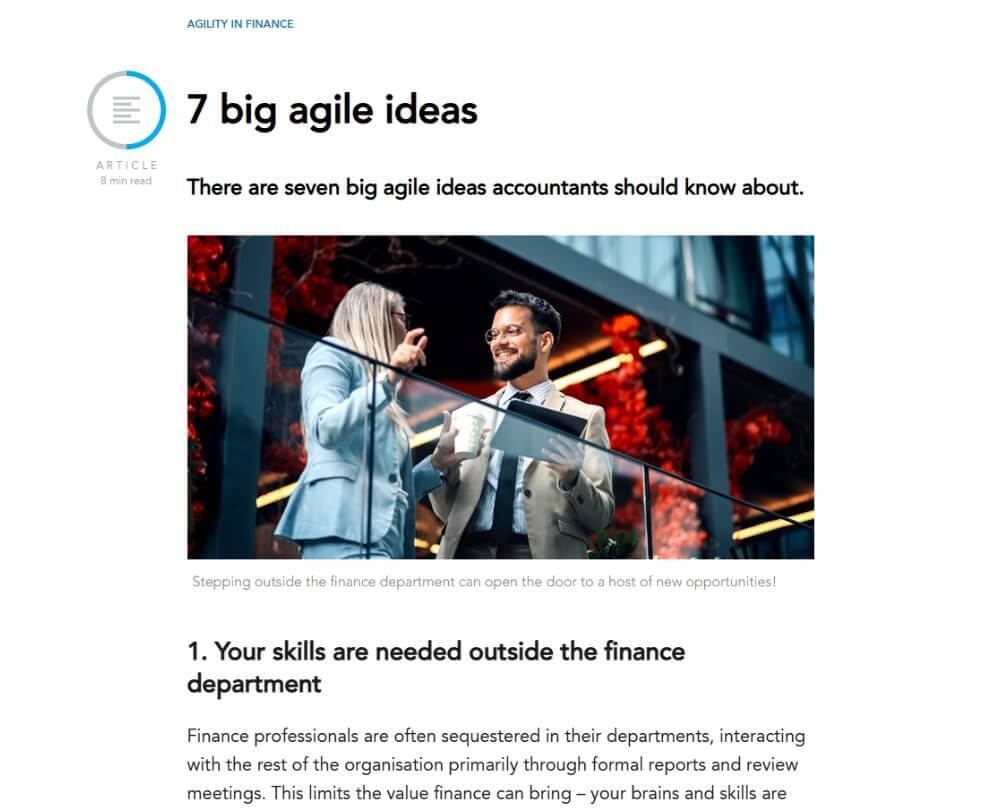
7 big agile ideas
Mythbusting agility
Who benefits?
Collaboration
What your organisation needs
A collaborative mindset
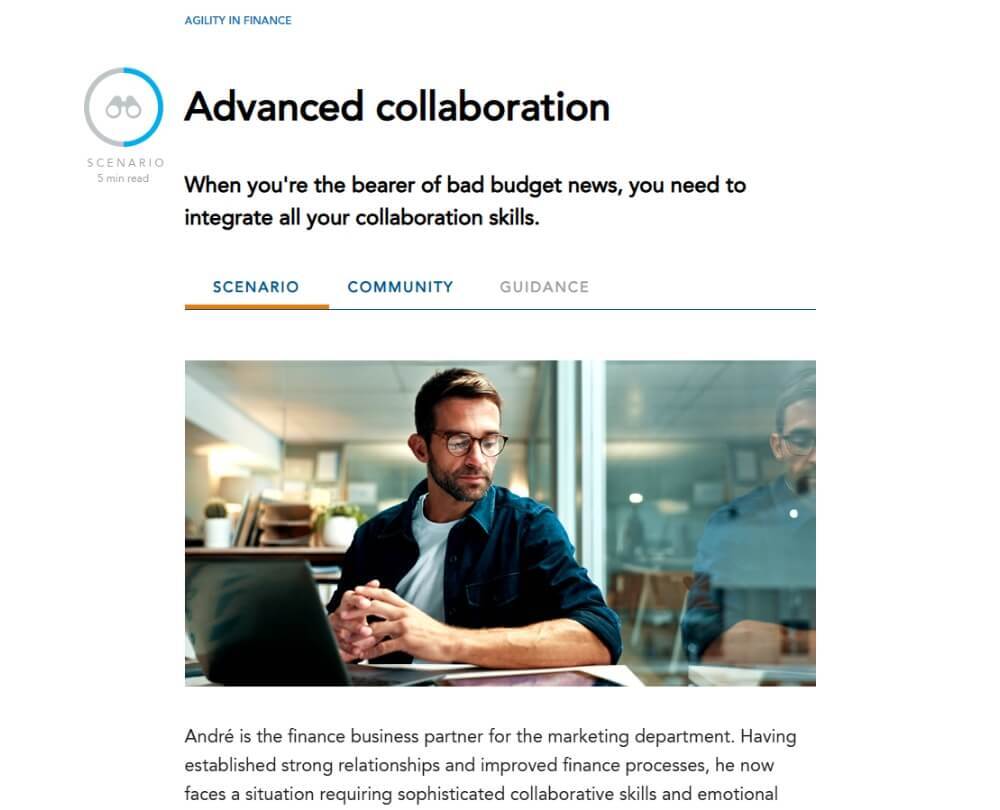
Becoming the department of “yes!”
Common perceptions of finance
Part of the action
Collaboration through transparency
Practical steps towards collaborating
Adaptability
Plan to adapt
The problem with budgets
Continuous replanning
Why re-plan?
A way with words
Participatory budgeting
Implementing agile budgeting
Overcoming obstacles
Governance and risk
Risk management issues
The governance balance
Keeping control
The illusion of control
Risk and control tactics
Test and adapt
Control without reports
Improvement and implementation
First steps
The reporting paradox
Think big, start small, act now!
Confidence through experiments
A simple plan
Decrease workload, increase impact
Measuring progress
Key takeaways
How it works
Author
You might also like
Take a look at some of our bestselling courses