Anti-Money Laundering Compliance
This course outlines the rules and regulations involved in anti-money laundering compliance and thoroughly explores the kind of in-depth customer due diligence accountants should be carrying out to mitigate the risks of money-laundering and terrorist financing.
£100 +VAT



Anti-Money Laundering Compliance
£100 +VAT
Anti-Money Laundering Compliance
This course is not currently available. To find out more, please get in touch.
This course will enable you to
- Create a solid company AML policy and make sure you have the correct processes and procedures in place
- Get to grips with current anti-money laundering regulations
- Understand the typical typologies used to launder money
- Spot the many “red flags” that could point to money laundering
- Conduct a ten-step AML risk assessment and scrutinise those risks
- Identify potential areas of improvement in your own organisation
About the course
Both financial crime itself and anti-money laundering (AML) regulation are constantly evolving. Digitalisation means new ways of committing financial crime are being created and regulators are being kept on their toes to protect consumers and safeguard the financial system. The role accountants can play in identifying illegal activity in this area is key.
This course outlines the rules and regulations involved in anti-money laundering compliance. It thoroughly explores the kind of in-depth customer due diligence that accountants and finance professionals should be carrying out to mitigate the risks of money laundering and terrorist financing.
The course dives into the finer details of AML regulation structure and will help you to assess your control framework and ensure that you have all the correct processes and procedures in place.
Please Note: This course only covers AML regulation in the UK and Ireland
Contents
The world of money laundering
Money laundering activities
Anti-money laundering regulation
An international framework
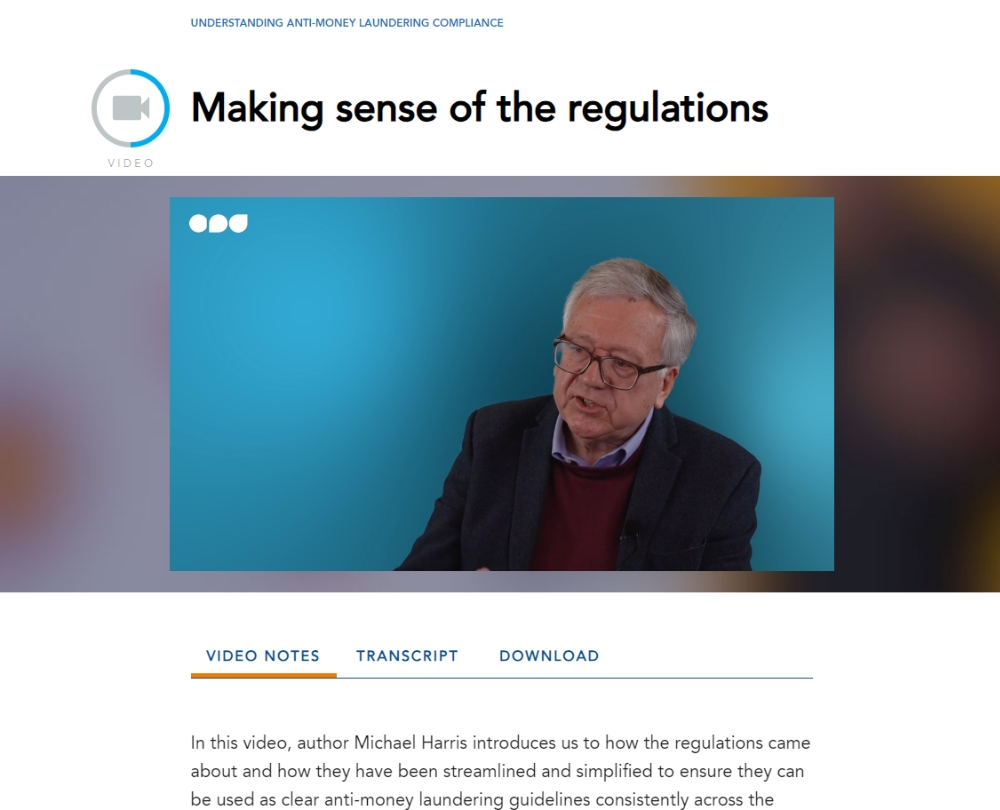
Making sense of the regulations
Developing AML policy
The role of technology
Recognising the threat
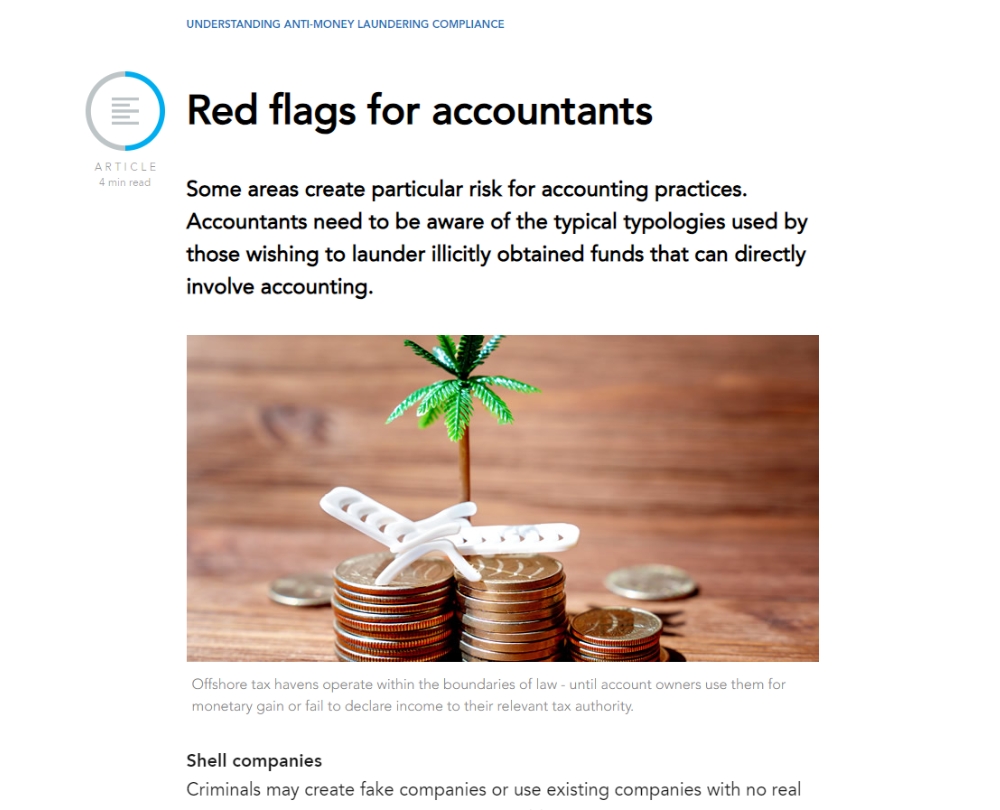
Red flags for accountants
Best practice
Anti-money laundering regulations
Anatomy of AML regulations
Regulation revisions
Staying up to date
Creating an AML policy
A culture of compliance
Reporting suspicious activity
Three lines of defence
Compliance is good for business!
Protecting your organisation
Conducting an AML risk assessment
Preventive measures for accountants
Keeping down compliance costs
How well do you know your customer?
Audit and regulatory reporting
The digital landscape
Assessing clients for risk
Risk mitigation strategies
Applying levels of risk
Determining due diligence
Who benefits?
Does ownership matter?
The problem with PEPs
Know your sources
Ongoing monitoring
Technology and AML
How it works
Author

Michael Harris
Michael works with technology and data companies who provide anti-money laundering and anti-bribery compliance solutions. Michael offers unique insights into the changing geo-political risk landscape, the evolution of financial crime regulation, the genesis and development of AML and ABC regulation, and how data and technology can empower organisations.
You might also like
Take a look at some of our bestselling courses