Emotional Intelligence
Emotional Intelligence (EI) is vital for developing meaningful professional relationships. Develop your skills by exploring what EI involves and the role it plays in understanding emotions and building rapport to develop stronger relationships
£100 +VAT

Emotional Intelligence
£100 +VAT
Emotional Intelligence
This course is not currently available. To find out more, please get in touch.
This course will enable you to
- Understand the basics of Emotional Intelligence (EI) and its importance in your role as an accountant
- Discover the importance of self-awareness and self-reflection and the benefits these can have on your performance
- Identify the difference between thoughts, emotions and moods
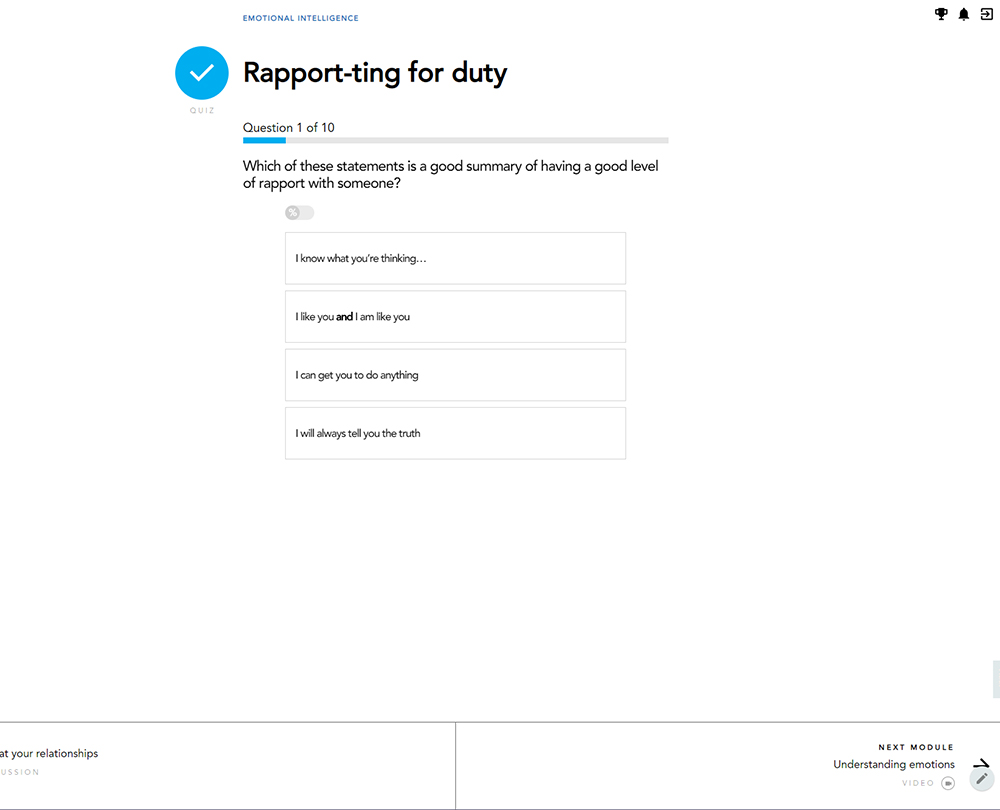
- Understand the importance of building rapport when developing relationships
- Discover the importance of empathy and how to use it in a professional environment
About the course
Extensive research shows Emotional Intelligence (EI) is crucial for creating and developing meaningful relationships. But what is meant by EI and how can you improve your EI skills?
This course will guide you through the basics of EI and identify the role your emotions have on your performance. It looks at how you can improve your EI through self-awareness and self-reflection. Once we have a better understanding of ourselves, we can understand the emotions and build rapport with those around us, helping to create and sustain professional relationships.
Contents
The importance of emotional intelligence
Emotional intelligence for finance professionals
Getting started
The importance of EI
Making EI work for you
Self-awareness
Understanding yourself
Internal vs external
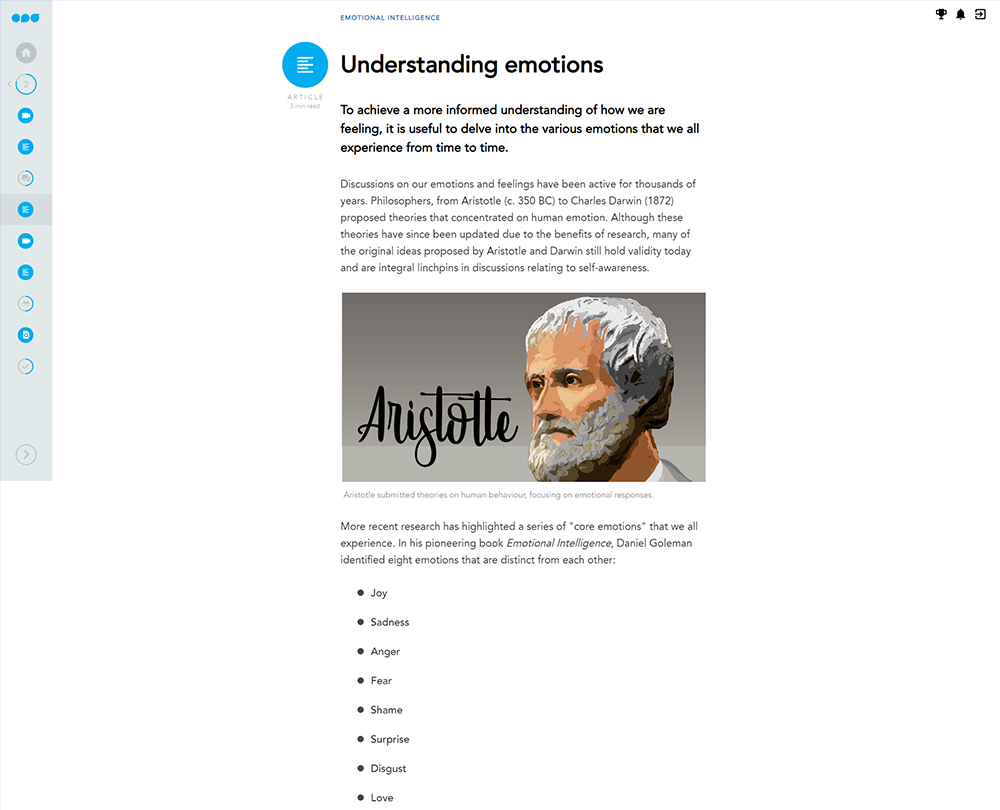
Understanding emotions
Growing your own self-awareness
The benefits of self-awareness
Self-reflection
Looking at yourself
What is self-reflection anyway?
Questions for self-reflection
Asking the right questions
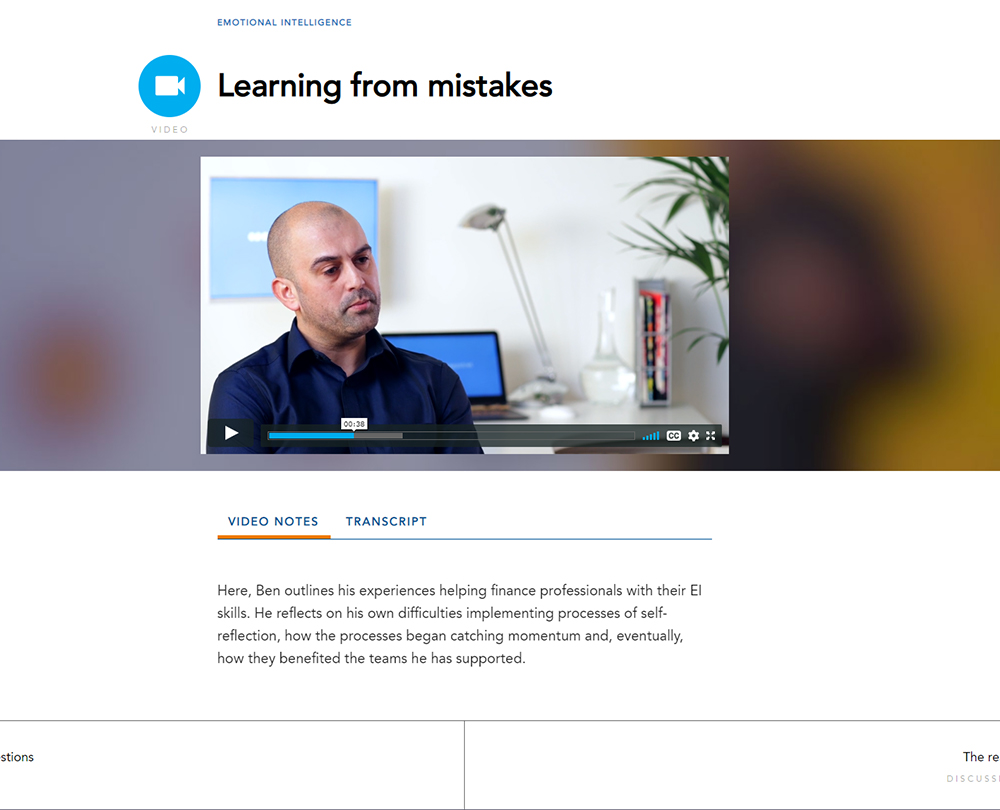
Learning from mistakes
Reflecting more and reflecting better
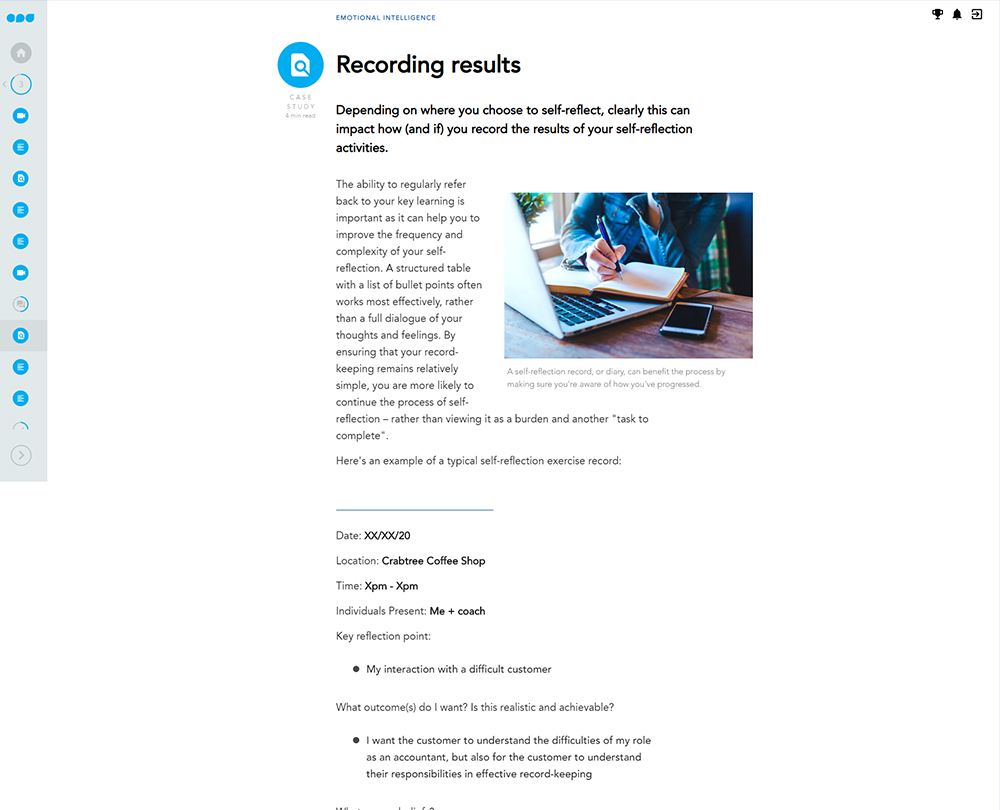
Making the most of the results
Understanding and managing emotions
Controlling yourself
Thoughts, emotions and moods
Emotional validation
Emotional acceptance
Emotional suppression
Building rapport and relationships
Building relationships
Making connections
Establishing rapport
The importance of eye contact
How to really listen
Listening and empathy
Rapport checklist
Building a team
Accountants and rapport
Emotional expression and empathy
Understanding emotions
Facial expressions
Tone, volume and body language
Accountants and emotions
Empathy and being interested
Empathy and other people
The stages of empathy
The next steps
How it works
Author

Ben Rawal
After a successful career as a head of internal audit, Ben changed tack to work with accountants, finance professionals and teams on their personal effectiveness. He is now a director and lead consultant with Aspire Consulting Solutions, a business supporting individuals and teams to improve overall organisational performance.
You might also like
Take a look at some of our bestselling courses