Employment and Payroll Taxes
Revised and up to date for 2025/26. Employment and Payroll Taxes is a useful reference tool for both employers and employees. This course provides an introduction to employment and payroll tax and explores some of the more common issues.
£100 +VAT


Employment and Payroll Taxes
£100 +VAT
Employment and Payroll Taxes
This course is not currently available. To find out more, please get in touch.
This course will enable you to
- Determine whether someone is employer or self-employed and their different tax obligations
- Understand the reporting requirements and timescales that employers must adhere to
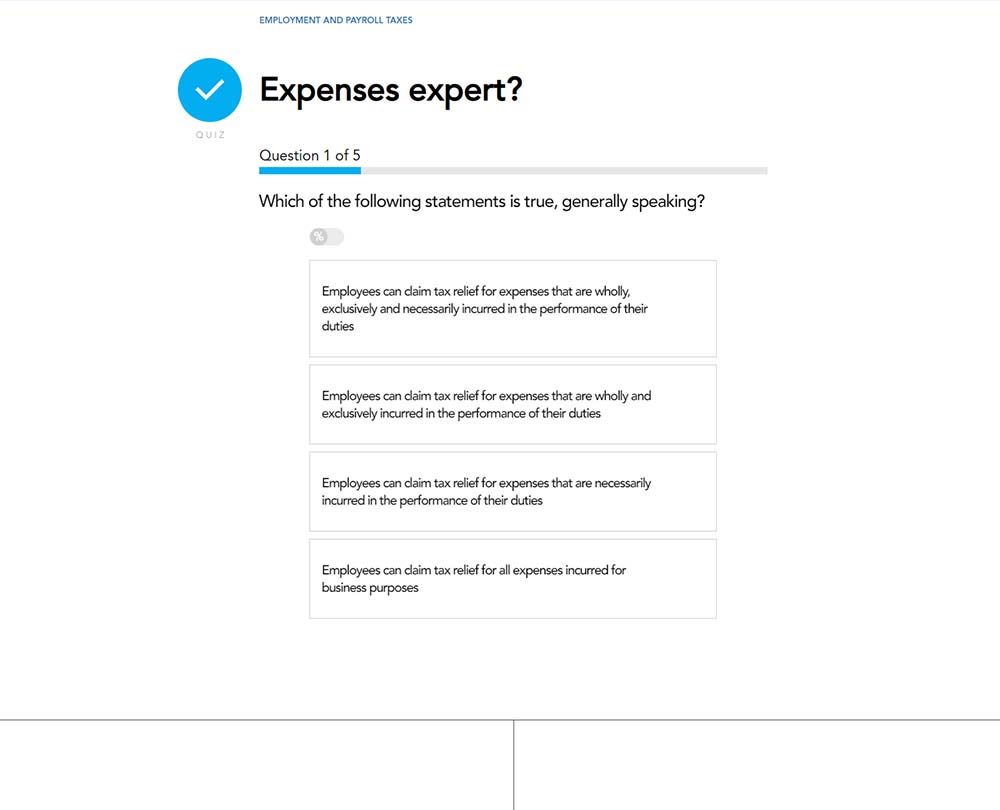
- Recognise the tax and National Insurance implications of paying and receiving some of the more common types of expenses payments
- Deal with popular Benefits in kind (BIK) for tax purposes
About the course
The Pay As You Earn (PAYE) system for employment tax and National Insurance (NI) is designed to make life easier for employees, because it is generally the employer’s responsibility to get contributions to HMRC right. For the employer, there is a series of compliance procedures, which they must adhere to, and a severe penalty regime in operation if they fail to satisfy their employment tax obligations.
As an accountant or finance professional, it is important to understand, for tax purposes, how to determine an individual’s employment status, how to operate PAYE, and the implications of the expenses and benefits-in-kind regime.
This course covers all these areas and more, giving a broad understanding of how employment tax works. Employment and Payroll Taxes is a useful reference tool for both employers and employees, as well as accountants in both practice and industry. By the end of the course, you will have a good understanding of the basic principles of employment tax, enabling you to approach the subject with confidence in your accounting or finance role.
Please note: This course only covers tax in the United Kingdom


Contents
Employment status
Employment and payroll taxes
Employment status
Employed versus self-employed
Indicators of employment
Employee rights
Indicators of self-employment
National Insurance classes
Taking on employees
First steps on employment
Employing staff for the first time
PAYE
The Real Time Information programme
PAYE codes
Expenses payments
Dealing with expenses
Tax relief on expenses
Expenses payments
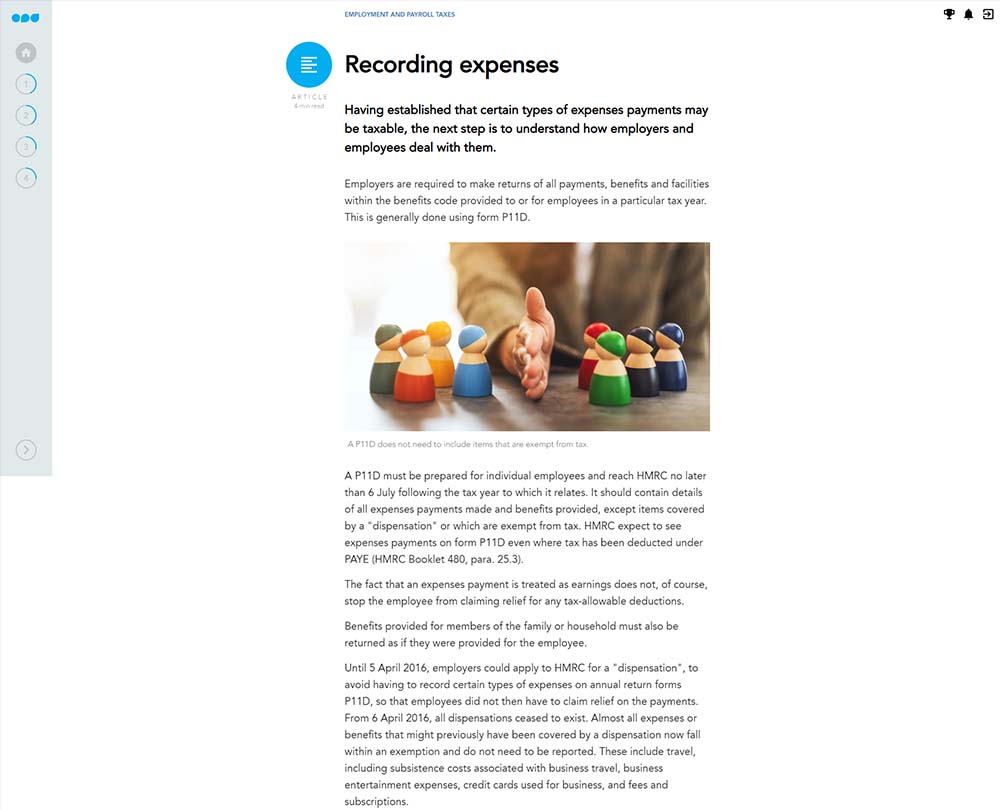
Recording expenses
Travel expenses
Tax-free mileage rates
Benefits in kind
Dealing with benefits in kind
Company cars
Company vans
Employer-supported childcare
Tax-free childcare
Relocation expenses and benefits
Tax-free benefits
How it works
Author

Sarah Laing
Sarah is a Chartered Tax Accountant (CTA) and a member of the Chartered Institute of Taxation (CIOT). Sarah currently works as a freelance tax author providing technical writing services to the tax and accountancy professions.
You might also like
Take a look at some of our bestselling courses