Financial Modelling: Getting Started
Financial modelling is one of the most highly valued skills of the finance professional. This course will help you to get started mastering that skill, by choosing the right approach, following the right processes and adhering to the relevant standards and guidelines.
£100 +VAT

Financial Modelling: Getting Started
£100 +VAT
Financial Modelling: Getting Started
This course is not currently available. To find out more, please get in touch.
This course will enable you to
- Build great financial models.
- Consider the wider context of financial modelling and what can be achieved.
- Spot and avoid the common pitfalls of financial modelling.
- Select the most appropriate type of financial model to achieve your objectives.
- Follow a clear process for developing a model to ensure your findings are consistent and comparable.
- Use the standards, codes and guidelines for financial modelling, to ensure excellence in layout and method.
About the course
Financial modelling is one of the most highly valued skills in accounting and financial analysis. It’s also one of the most widely misunderstood. So what is a financial model, when should you use one, what process do you use, and how do you ensure they are as accurate as possible?
This course will help you to get started in financial modelling. You will learn how to choose the best model for your purpose, the process to follow to ensure consistency and comparability, and how to ensure that by following the standards and guidelines, your model will be easily understandable by colleagues.


Contents
Financial modelling foundations
Structured decision making
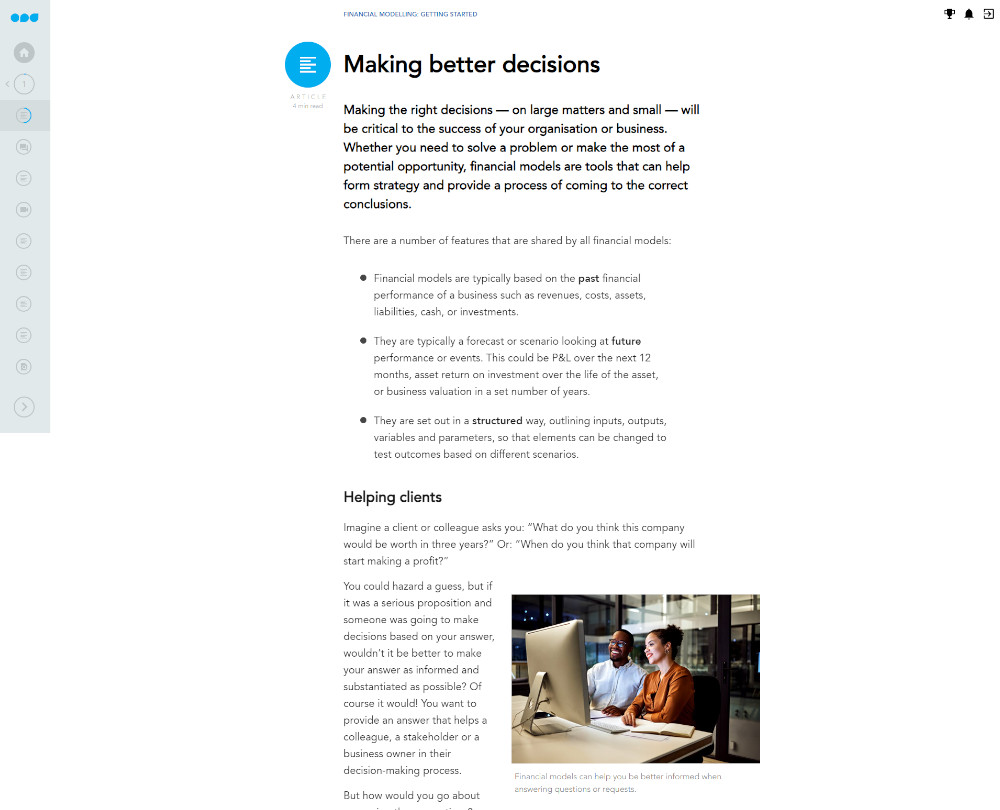
Making better decisions
When to use a financial model
Key skills
Other useful skills
Elements of a financial model
Key terms
Concept diagrams
Principles
What can go wrong
Types of financial model
Where to start
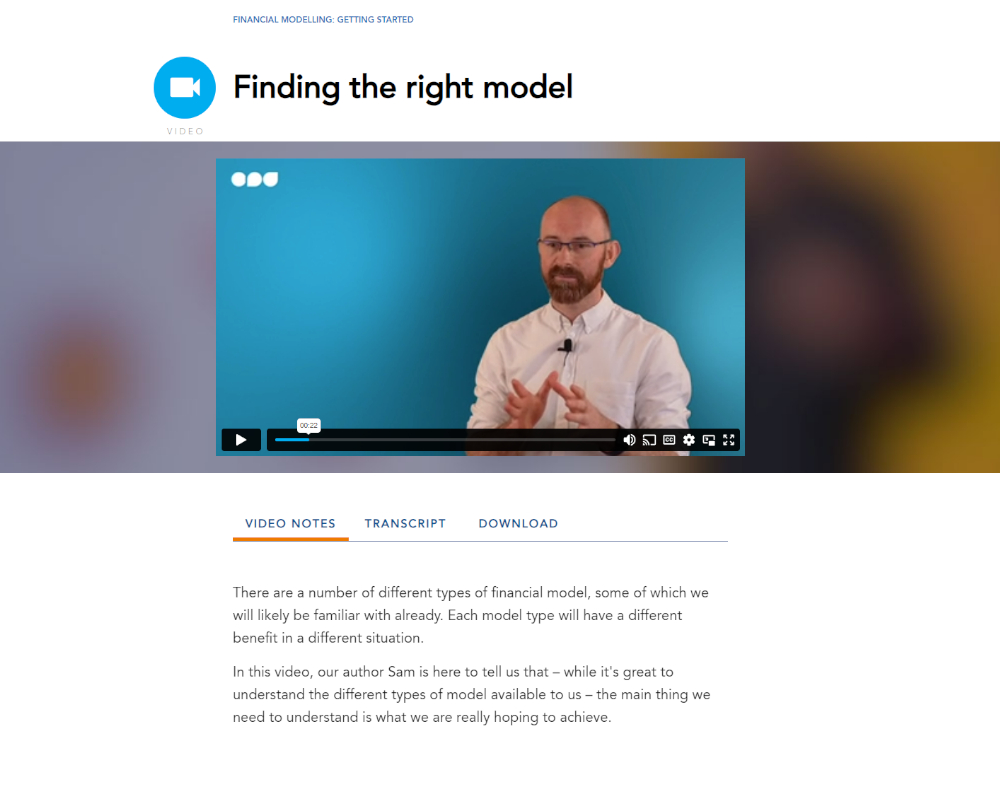
Finding the right model
Understanding your aims
Profit and loss
P&L forecasting
Discounted cash flow
Operating costs
What-if Analysis
Loan or debt financing
Mergers, acquisitions, and investments
Fee earner revenue: walkthroug
Understanding the process
The stages of financial modelling
Understanding the four stages
Information gathering stage: good data
Design stage: key terms
Look-and-feel and filters
Formulas
Design stage: UI & UX
Charts and slicers
Design stage: formatting
The importance of double-checking
Build stage
Standards, codes and frameworks
Why standards matter
The FAST standard
Applying standards
Workbook design: general principles
PwC’s Global Financial Model Guidelines
ICAEW’s Financial Modelling Code
Excel functions: keeping it simple
Excel functions: risk levels
Understanding calculations
Calculation standards
Calculation blocks
Avoiding mistakes
How it works
Author

Samuel Ellis
Sam has been using modern data technologies for the past decade to operate a lean and agile accounting function. He uses data analytics software e.g. Tableau to transform accounting reporting in a modern, shareable and actionable format whilst reducing time taken to prepare reports and streamlining content to minimise noise. Sam was a founding member and Chair of ACCA’s Global Technology Forum, steering ACCA’s approach to updating members around key technology developments and trends.
You might also like
Take a look at some of our bestselling courses