IFRS: Structure of Financial Statements
Gain a clear understanding of how the IFRS framework shapes financial statements. This course explains the structure, purpose and key principles behind IFRS reporting.
£100 +VAT

IFRS: Structure of Financial Statements
£100 +VAT
IFRS: Structure of Financial Statements
This course is not currently available. To find out more, please get in touch.
This course will enable you to
- Apply the principles of the IFRS regime as laid out in the conceptual framework
- Follow the general rules and criteria for financial statements prepared under IFRS
- Understand how IFRS 18 will replace IAS 1
- Recognise cash transactions and classify cash flow activities as defined by IAS 7
- Meet the requirements for interim financial statements under IAS 34
About the course
Understanding the IFRS regime starts with the big picture. This course introduces the IFRS conceptual framework – the foundation on which all standards are built – and explains how it helps preparers and users of financial statements make informed decisions about recognition, measurement, presentation and disclosure.
You’ll explore three key standards that structure financial statements under IFRS. IFRS 18, which replaces IAS 1, outlines general presentation and disclosure principles and is critical for anyone preparing annual statements. IAS 7 defines how to classify and present cash flows, and IAS 34 sets minimum requirements for producing reliable interim financial reports. Together, they provide essential guidance for structuring both full-year and interim reporting cycles.
This course will give you the knowledge to interpret and apply these core standards with clarity. Equip yourself to produce compliant financial statements, explain their structure and content to others, and stay up to date with recent developments across the IFRS landscape.


Contents
The conceptual framework
The basis of the conceptual framework
The structure of the conceptual framework
General purpose financial reporting
Qualitative characteristics
Financial statements and the reporting entity
Recognition, derecognition and measurement
Judging uncertainty
Presentation, disclosure and capital
IFRS 18 Primary financial statements
IFRS: bigger and better
IFRS 18 versus IAS 1
Objectives and scope
Aggregation and disaggregation
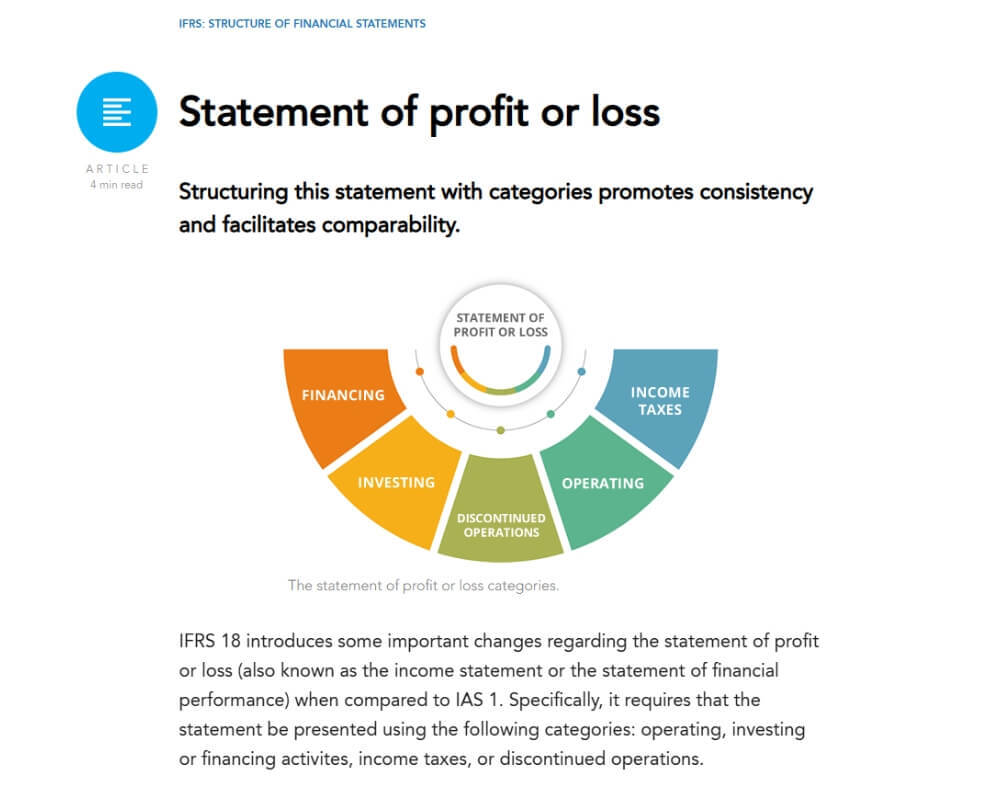
Statement of profit or loss
Statement of comprehensive income
Spotlight on management performance
Management performance reporting
Statements of financial position and changes in equity
Disclosure notes
IAS 7 Statement of cash flows
Objectives, scope and presentation
Classifying activities
Method management
Foreign currency
Interest and dividends
Deciding on disclosures
Disclosures and other issues
IAS 34 Interim financial reporting
Objectives and scope
Taking stock
The minimum requirements
Recognition and measurement
Disclosures
The small matter of disclosures
How it works
Author

Wayne Bartlett
Wayne is an internationally acclaimed speaker and trainer on all aspects of public and private sector accounting and auditing standards. He has been instrumental in helping to develop the profession internationally and has taken lead roles in the development of new professional bodies and the accounting profession in Mozambique and Rwanda, and been extensively involved in developing financial reporting in many countries across the globe.
You might also like
Take a look at some of our bestselling courses