IFRS: The Structure of Financial Statements
This course explains the design of financial statements within International Financial Reporting Standards (IFRS) and considers their key components, as well as what each statement is trying to achieve.
£100 +VAT

IFRS: The Structure of Financial Statements
£100 +VAT
IFRS: The Structure of Financial Statements
This course is not currently available. To find out more, please get in touch.
This course will enable you to
- Understand the principles and aims of the IFRS regime
- Comprehend the general rules regarding financial statements prepared under IFRS
- Gain an overview of the reports
About the course
Do you understand the fundamental principles underlying IFRS? Without a clear understanding of the essential background to the IFRS regime as a whole, it is impossible to fit the individual IFRSs into the bigger picture.
Now enhanced with additional case studies and video interviews with the author, this course explains the design of financial statements within International Financial Reporting Standards (IFRS) and considers their key components, as well as what each statement is trying to achieve. You will recognise the information that needs to be included as well as the concepts of fair presentation, accruals and going concern, building to a full understanding of the core framework into which the IFRSs fit.

Contents
The aims of IFRS
What is IFRS?
General purpose financial statements
IFRS regime: Basic principles
Key financial statements
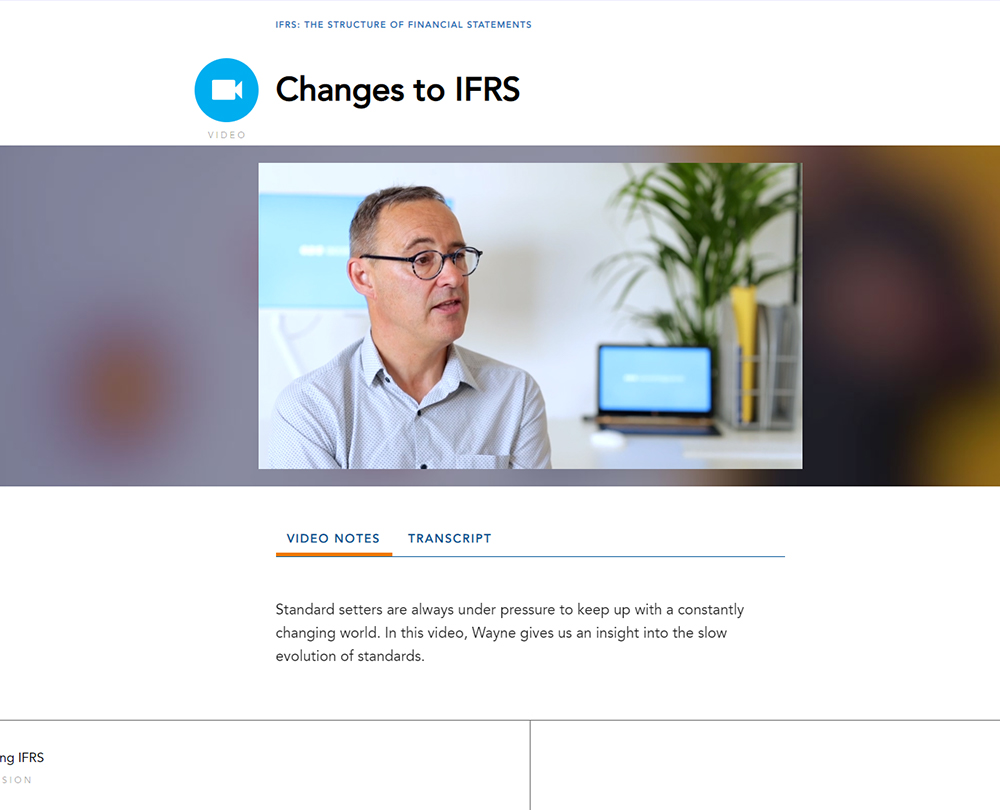
Changes to IFRS
Overcoming barriers
General rules
Moving to IFRS
The purpose of financial statements
Information that must be included
The going concern concept
The financial statements under IFRS
The statement of financial position
The statement of financial position explained
Statement of financial position: The aims
Information in the statement of financial position
Current and non-current assets
Current and non-current assets and liabilities
Current liabilities
Disclosures
The statement of comprehensive income
The statement of comprehensive income explained
Statement of comprehensive income
Non-controlling interest
What is comprehensive income?
Types of income included
Challenges to overcome
Other financial statements and disclosure notes
Other financial statements explained
The statement of changes in equity
The statement of cash flows
Structure of the statement of cash flows
Disclosure notes explained
Structure of the notes
Accounting policies in the financial statements
Sources of estimation uncertainty
IAS 1 and capital
Operating, investing and financing activities
How it works
Author

Wayne Bartlett
Wayne is an internationally acclaimed speaker and trainer on all aspects of public and private sector accounting and auditing standards. He has been instrumental in helping to develop the profession internationally and has taken lead roles in the development of new professional bodies and the accounting profession in Mozambique and Rwanda, and been extensively involved in developing financial reporting in many countries across the globe.
You might also like
Take a look at some of our bestselling courses