Internal Auditing: A Risk Based Approach
The Internal audit function plays a crucial role in managing and mitigating an organisation’s risks. This course provides insight into this area and teaches you the key elements in planning, executing, and reporting on internal audit assignments.
£100 +VAT

Internal Auditing: A Risk Based Approach
£100 +VAT
Internal Auditing: A Risk Based Approach
This course is not currently available. To find out more, please get in touch.
This course will enable you to
- Identify the key elements of internal audit and the associated standards
- Plan and execute an internal audit assignment and design an audit programme
- Understand the responsibilities of the internal auditor with regards to fraud and how to identify fraud
- Report on an internal audit assignment and the key factors to consider when sharing these
About the course
Internal audits play a crucial role in managing an organisation’s risks and mitigating these to avoid disastrous consequences. But what makes an effective internal audit function and how can you make this work in your organisation?
In this course you will discover the key principles and standards associated with internal audits, along with how to identify and act on fraud. Learn about how to plan, execute, and report on internal audit assignments and the key factors to consider at each stage.
Contents
The key elements of internal audit
The role of the internal audit
Internal audit standards
Risk-based internal auditing
Strategic and annual planning
The impact of internal audits
The role of the internal audit charter
Ethics and professional development
The rules of internal auditing
Planning an internal audit assignment
A general approach to planning
The importance of objectives
Internal vs external
Undertaking a preliminary assessment
Designing audit programmes
Resourcing an assignment
Planning, objectives, and resources
Executing an internal audit assignment
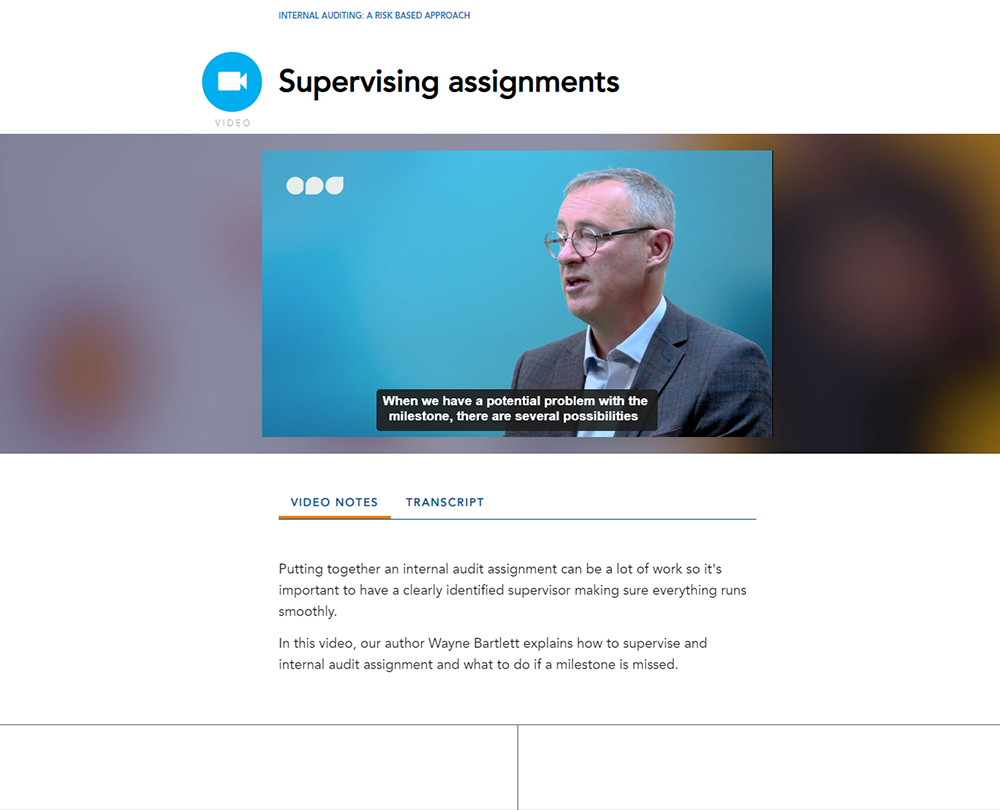
Supervising assignments
Collecting information
Analysis and evaluation – and how one feeds the other
Applying considerations and documenting results
Fraud and internal audits
Fraud and the responsibilities of the internal auditor
Reporting on an internal audit assignment
The key elements of an internal audit report
Getting reporting right
Conclusions and recommendations
Recommendations are key
Finalising and sharing reports
The importance of objectives
Following up: a crucial stage
Lessons learnt
How it works
Author

Wayne Bartlett
Wayne is an internationally acclaimed speaker and trainer on all aspects of public and private sector accounting and auditing standards. He has been instrumental in helping to develop the profession internationally and has taken lead roles in the development of new professional bodies and the accounting profession in Mozambique and Rwanda, and been extensively involved in developing financial reporting in many countries across the globe.
You might also like
Take a look at some of our bestselling courses