International Anti-Money Laundering
Are you familiar with the regulation on tackling money laundering and the financing of terrorism in the global financial system? This course explores the regulatory system within global finance designed to eliminate money laundering and to counter the financing of terrorism.
£100 +VAT

International Anti-Money Laundering
£100 +VAT
International Anti-Money Laundering
This course is not currently available. To find out more, please get in touch.
This course will enable you to
- Recognise, understand, and minimise the risk to your organisation and clients of money laundering
- Understand the AML/CFT regulatory system across the world
- Identify who is an ‘obliged entity’ and their main duties
- Follow the process of normal due diligence
- Understand the process of enhanced due diligence and what to do if a customer is ‘high risk’
About the course
Anti-money laundering (AML) and countering the financing of terrorism (CFT) is an increasingly important area for accountants. A thorough understanding of the regulatory system within global finance will help you minimise risk for your organisation and your clients.
This course takes an in depth look at the regulatory system within global finance designed to eliminate money laundering and to counter the financing of terrorism. It gives you everything you need to understand this complex but important subject including information on Financial Action Taskforce (FATF), obliged entities, what would be considered normal and enhanced due diligence and much more.

Contents
Aims and substance
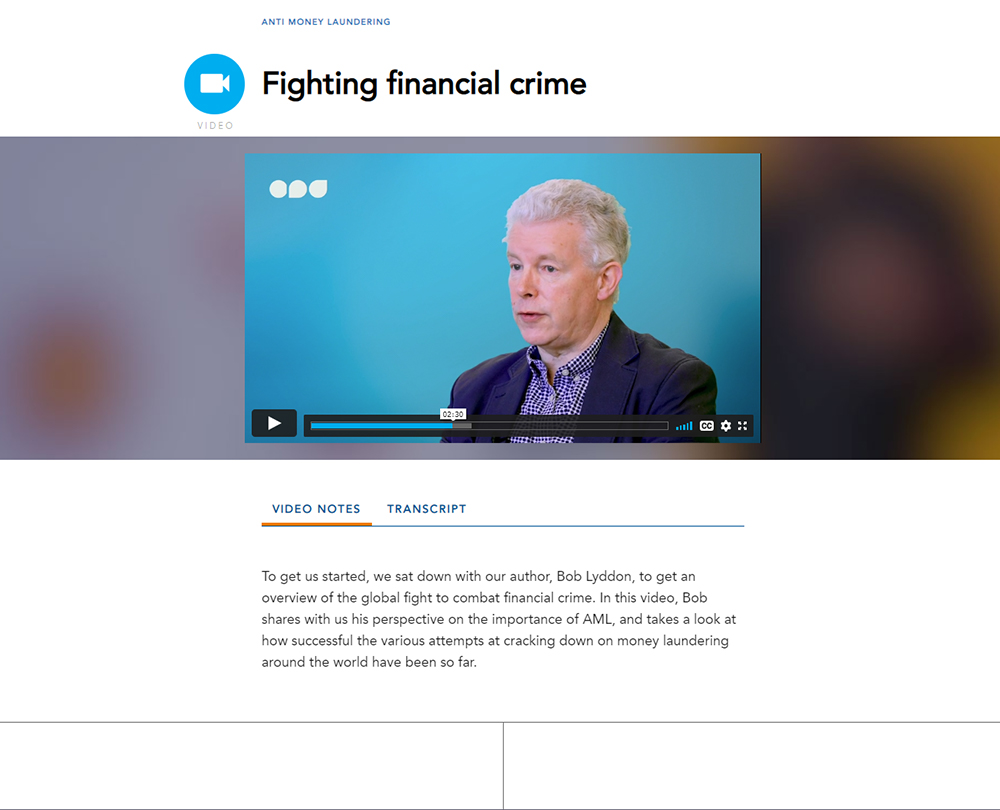
Fighting financial crime
Regime objectives
Sanctions and embargoes
National law-making
Sources of advice
Main duties of an obliged entity
Obliged entities
Who is an obliged entity?
Internal AML/CFT organisation
Due diligence
A risk-based approach
Normal due diligence
Normal due diligence
Customer due diligence
Non-natural legal persons
Politically exposed persons
Enhanced due diligence
Enhanced due diligence
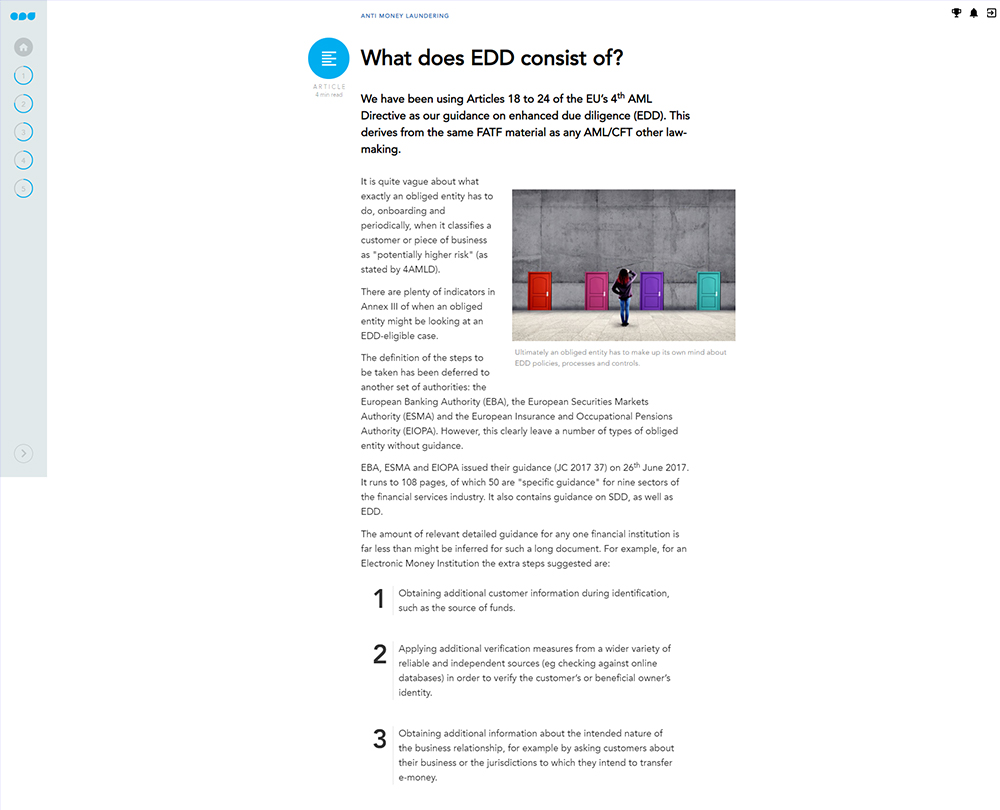
What does EDD consist of?
Practical examples of EDD
EDD and PEPs
Black holes
Black holes
Validating authenticity
High risk countries
Trusted third parties
Electronic identity
Unexplained wealth order
How it works
Author

Bob Lyddon
An experienced management consultant both privately and with PwC.
You might also like
Take a look at some of our bestselling courses