KPIs for Practices
Accountancy is a profession based on expertise and knowledge, so developing key performance indicators (KPIs) for a practice requires a particular approach. Whatever the size of your practice, this course will help you develop the right KPIs to improve performance.
£100 +VAT

KPIs for Practices
£100 +VAT
This course will enable you to
- Customise your accounting practice’s KPIs
- Identify different levels of KPIs and use them to monitor progress in various areas
- Outline key client, operational and growth measures for accounting firms
- Support your practice’s strategic goals, promote growth and satisfy clients
About the course
Key performance indicators are a key tool in measuring an organisations performance, and in identifying efficiencies and routes to growth. Accountancy is a profession based on expertise and knowledge, so developing key performance indicators (KPIs) for a practice requires a different approach.
Whatever the size of your practice, this course will help you develop the right KPIs to improve performance. It explores why KPIs for practices need to be different, works through different types of KPIs, and helps you decide which ones are right for your practice.

Contents
Why accounting practices need KPIs
The characteristics of accounting
Effective KPIs
A good measure
KPIs on three levels
Monitoring performance
Client KPIs
The importance of clients
Elements of client satisfaction
How to measure happiness
Client KPIs for accounting practices
Supporting clients successfully
KPIs of operational efficiency
Elements of efficiency
The role of KPIs
KPIs of operational efficiency
The role of employees
Appraising people
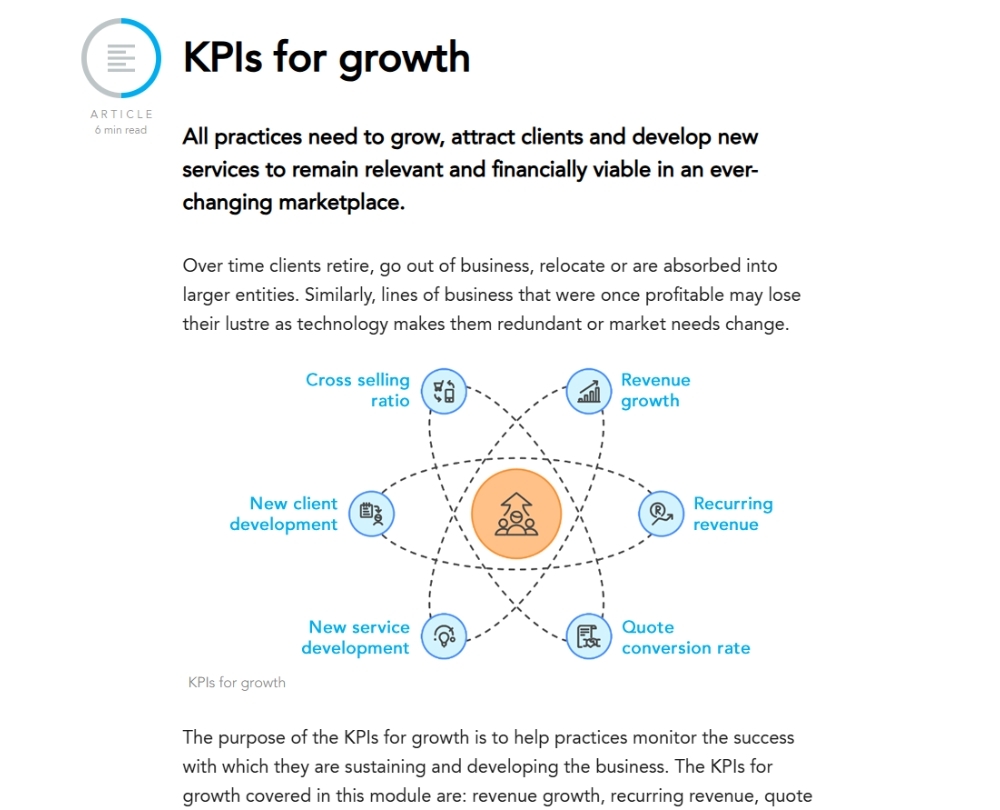
KPIs for growth
Grow your practice
The essential elements
KPIs for growth
Communicate your KPIs
Finalising your KPIs
The right KPIs for the job
How to choose KPIs
Create your vision and set goals
Choosing your KPIs
Finalise your selection
Dealing with the datas
How it works
Author

Ross Maynard
Ross has worked as a consultant and trainer for over 20 years, specialising in finance processes, management information and performance measurement. He supports organisations to understand their processes; facilitates improvement teams; and supports staff to work together as a team to deliver tangible and sustainable improvements.
You might also like
Take a look at some of our bestselling courses