Outsourcing
Outsourcing has seen a rise in significance in recent times. This course will help you discover the benefits and problems involved and what it takes to develop and sustain effective outsourcing relationships, helping you decide if it will work for your organisation.
£100 +VAT

Outsourcing
£100 +VAT
This course will enable you to
- Consider the true benefits and problems associated with outsourcing and whether outsourcing is right for you
- Clarify the role that outsourcing could play in your organisation
- Prepare an effective outsourcing contract
- Be aware of the ways in which you can monitor your outsourcing
- Understand the practicalities involved in developing and maintaining an outsourcing relationship
About the course
Outsourcing can mean many things but the simplest explanation is that outsourcing is asking another company to do a job or perform a service that your company could do, but for some reason, chooses not to do. The main driver for outsourcing is normally cost; to decrease the cost of production of goods or decrease the cost of providing a service.
This course takes a detailed look at outsourcing. You’ll discover the real benefits and problems of outsourcing, and whether if it will work for your organisation. You’ll gain an understanding of what should be included in an effective outsourcing contract and what it takes to develop and sustain good outsourcing relationships.
Contents
The basics
Why outsource?
What is outsourcing?
Common barriers
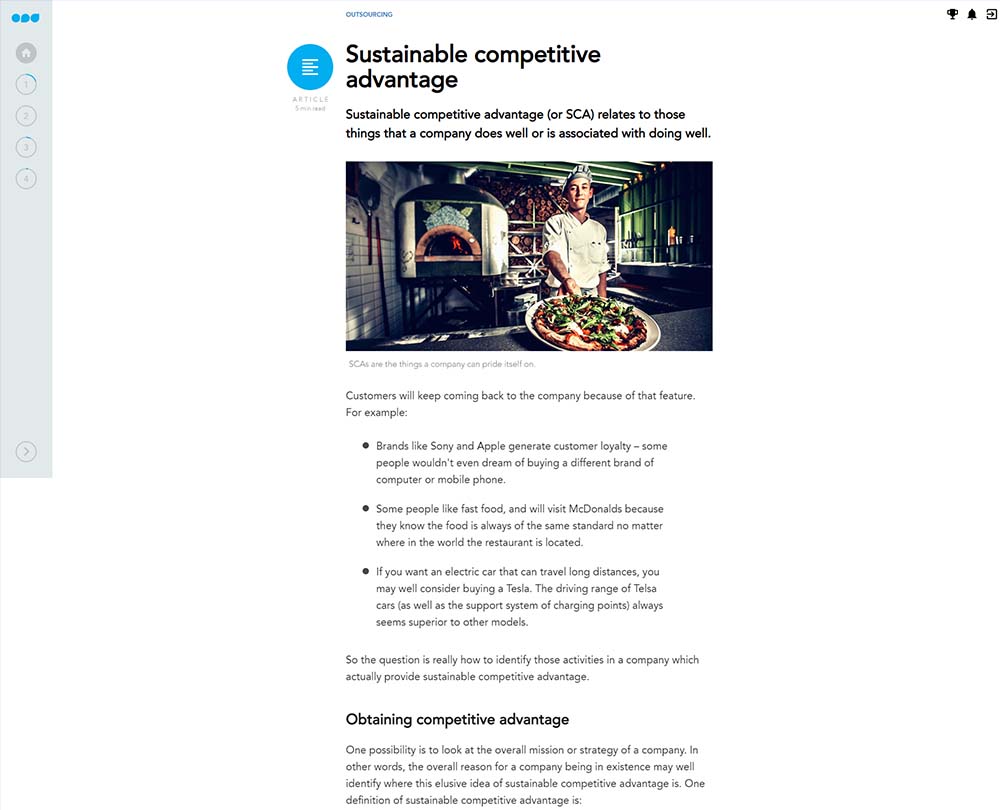
Sustainable competitive advantage
The value chain
The benefits and problems
Reasons for outsourcing
Costs
Indirect costs of outsourcing
Savings
Indirect benefits of outsourcing
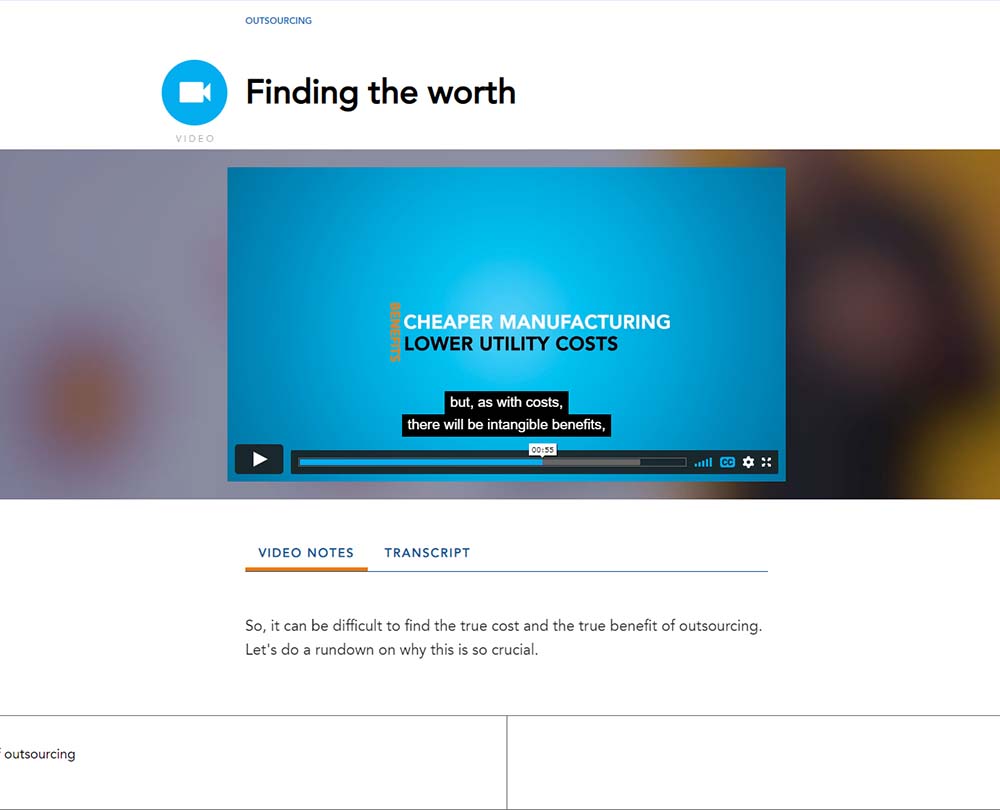
Finding the worth
Using the “wrong” outsourcing company
Outsourcing the wrong things
Controlling outsourcing
Outsourcing contracts
The balanced scorecard
The contract breakdown
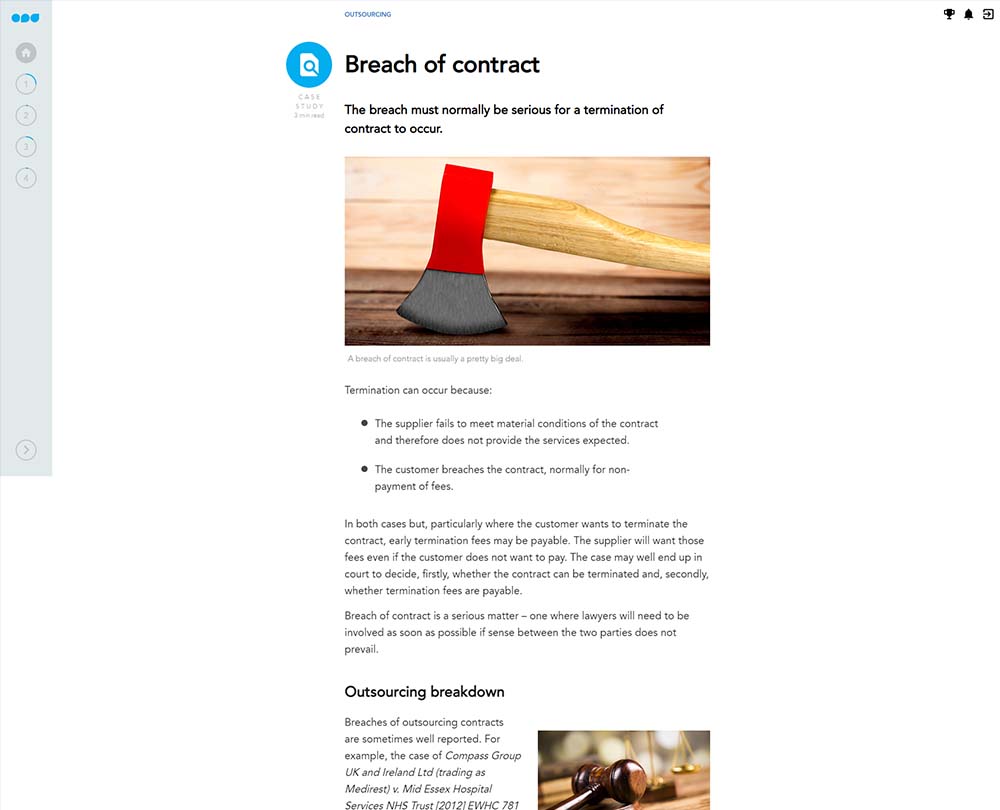
Contract completion
Termination for convenience
Life after termination
Practicalities
Working with outsourcers
Finding potential suppliers
Cutting the list of potential suppliers
Competitive procurement or sole sourcing
Contents of the RFI and RFP
Confirming supplier health
Evaluating the RFT
Issues with transitioning
Choosing contracts
Contents of the SLA
Benchmarking
When to use benchmarking
How it works
Author

Alan Lewin
Writer and teacher for audit, corporate governance, money laundering and information system strategy.
You might also like
Take a look at some of our bestselling courses