Periodic Review: A Case Study Approach
The FRC’s recent periodic review amendments have specific ramifications for those preparing financial statements in accordance with FRS 102. This course takes a case study approach, working through a variety of scenarios and outlining the kind of calculations that may be needed.
£100 +VAT



Periodic Review: A Case Study Approach
£100 +VAT
Periodic Review: A Case Study Approach
This course is not currently available. To find out more, please get in touch.
This course will enable you to
- Understand what first-time adoption of the key new policies might entail
- Recognise most leases on-balance sheet and remove any distinction between finance and operating leases
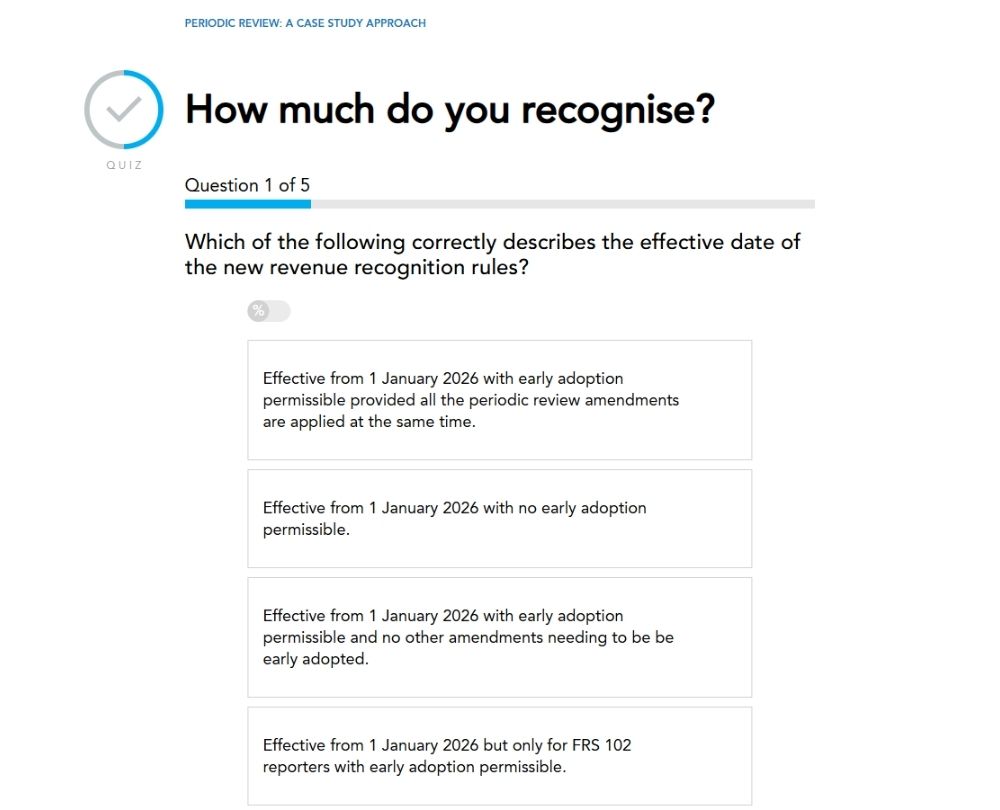
- Explain how revenue recognition rules have changed and apply the comprehensive five-step model
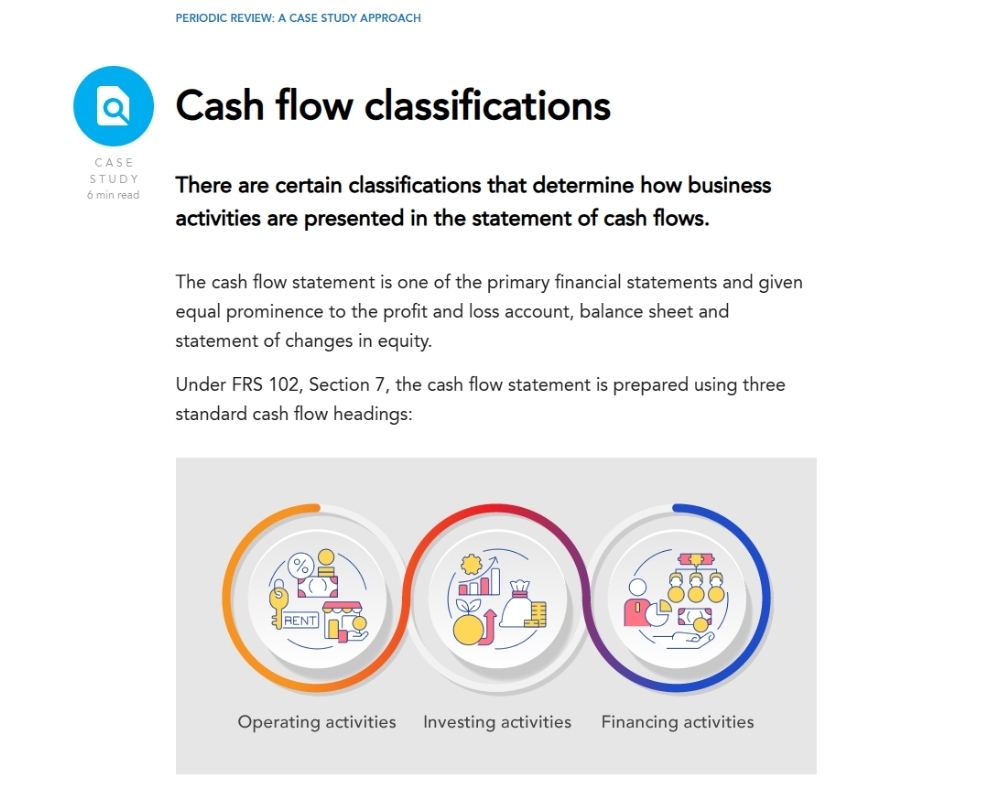
- Keep track of issues that may impact cash flow statements, including supplier finance arrangements and disclosures
- Correctly account for a business combination and any associated goodwill
About the course
The Financial Reporting Council (FRC) recently completed its periodic review of accounting standards, and new editions were published in September 2024. The amendments become effective for accounting periods commencing on or after 1 January 2026. There are significant changes to the accounting treatments for leases and revenue recognition, and the preparation of cash flow statements and consolidated financial statements is also impacted.
This course walks you through the key changes introduced in the updated standards, focusing on FRS 102 and related guidance. Using a series of practical case studies, it shows how the revised requirements apply in real-world contexts, including leases, revenue, cash flows, and group accounts, so you can clearly see how the changes affect reporting in practice.
By working through real examples, you’ll build a solid understanding of the new standards and how to apply them with confidence. The course provides the clarity you need to make informed decisions and ensure your reporting remains fully compliant as the changes take effect.



Contents
Leasing
All change
Scope of the new requirements
Exceptions to the rules
Exemptions from on-balance sheet recognition
Revenue recognition
Background to the amendments
Reframing revenue recognition
The five-step model approach
Know your business
Cash flow statements
Scope of FRS 102, Section 7
Change across the board
Supplier finance arrangements
Common cash flow problems
Business combinations and goodwill
Clarifying the rules on combinations
Accounting for a business combination
The purchase method – steps 1-4
The trouble with goodwill
Periodic review amendments
How it works
Author

Steve Collings
Steve is Director at Leavitt Walmsley Associates, a firm of Certified Chartered Accountants. He is an internationally recognised speaker, writer and commentator on all matters to do with financial reporting and auditing. Steve is a prolific author, having written over 25 books and currently represents the North West of England on ACCA”s Practice Network Panel.
You might also like
Take a look at some of our bestselling courses