Preventing Financial Crime
Understand the various types of financial crime and the controls that can be used to limit the opportunities for fraudsters to commit them. Look at how to create the right culture within an organisation to discourage collusion in fraud and encourage reporting and disclosure.
£100 +VAT

Preventing Financial Crime
£100 +VAT
Preventing Financial Crime
This course is not currently available. To find out more, please get in touch.
This course will enable you to
- Understand the range of financial crimes which can be committed, as well as the motives and profiles of those likely to commit them
- Gain comprehensive skills in risk management and improve your assessment of risk factors
- Identify how to properly approach and report financial crimes
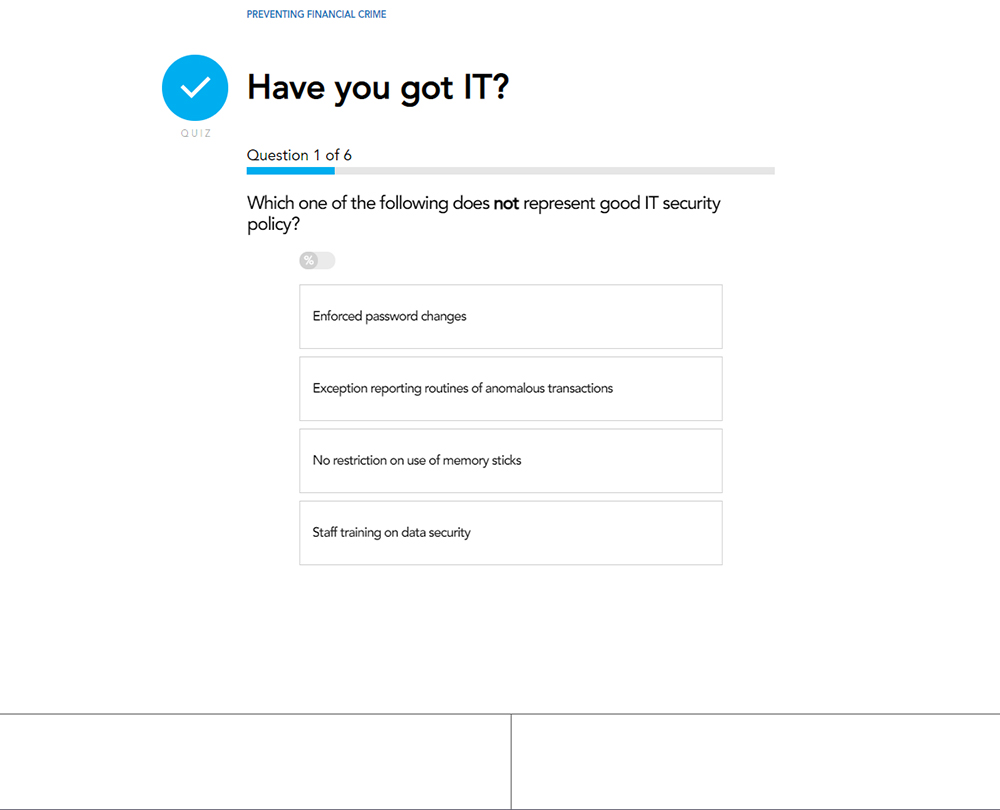
- Develop an effective policy for IT system risks
- Know how to influence ethical behaviour and create the right kind of corporate culture
About the course
Financial crime can be committed by anyone in an organisation, who is motivated by some need or desire, prepared to rationalise their actions, and thinks they won’t get caught. It can also be committed by external sources through malware attacks, therefore having an understanding of this area is crucial for protecting your organisation.
This course will enable you to understand the various types of financial crime and the controls that can be used to limit the opportunities for fraudsters to commit them. More importantly you will look at how to create the right culture within an organisation to not only discourage collusion in fraud but also to encourage reporting and disclosure. You’ll be able to implement strategies for risk management and responding to financial crime, as well as how to protect your organisation’s IT system.



Contents
Defining financial crime
The role of the accountant
What is financial crime?
The cost of fraud
Management fraud
Identifying criminals to uncover crime
Individuals and financial crimes
Money laundering
Bribery and corruption
FATF and the law
Organisation wide approaches
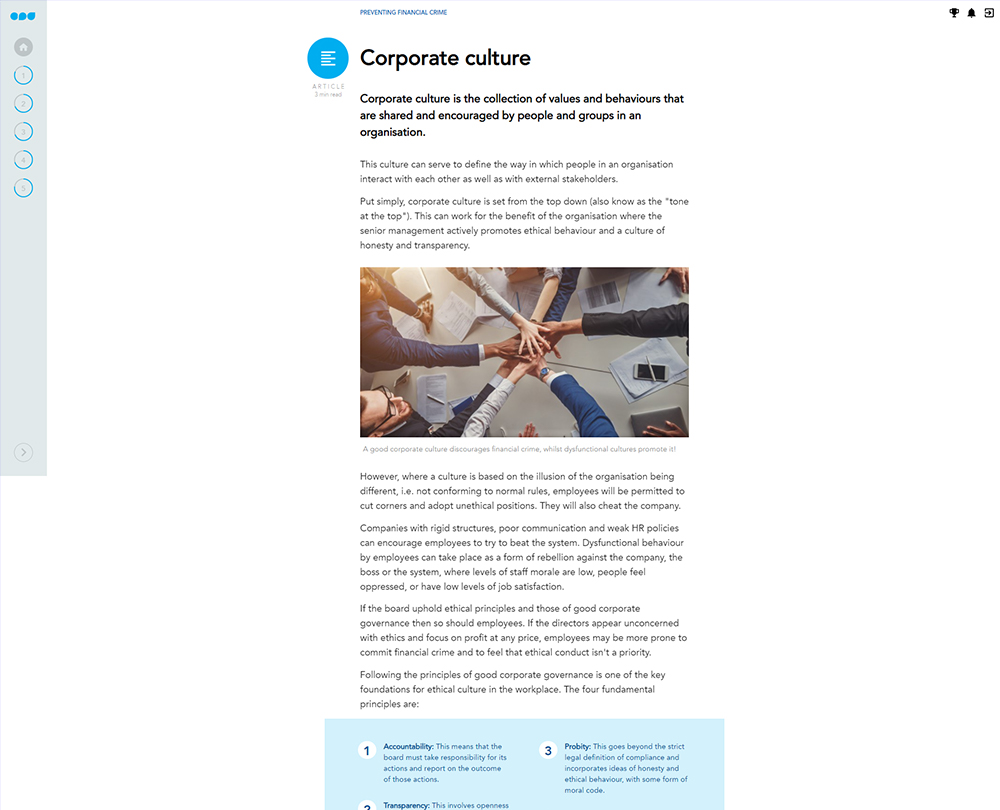
Corporate culture
Financial crime within organisations
Safeguarding against misconduct
Policies and procedures
The role of audit
The tone at the top
Individual financial crimes
Criminal motivations
Accounting aspects
Internal controls
The control environment
Monitoring controls
Spotting opportunities
Risk management and control
Inherent risk
Risk management
Risk management approaches
CRSA and ERM
Responding to financial crime
Red flags
IT approaches to fraud prevention
Assessing IT system risks
Protecting IT systems
The right solutions
Policy and procedure
Areas of vulnerability
Actions to be taken
Cloud computing
Formal risk management
Forensic readiness
How it works
Author

John Taylor
John is a Chartered Accountant who has spent many years advising small and medium-sized businesses across the North of England. John is the author of two industry standard textbooks: Millichamp – Auditing and Forensic Accounting. He has also written several auditing textbooks for AAT courses.
You might also like
Take a look at some of our bestselling courses