Real World Forecasting
We can’t prevent every mistake, but we can create forecasts that are adaptable and resilient. This course equips you with the practical skills to develop meaningful forecasts that drive better business decisions.
£100 +VAT

Real World Forecasting
£100 +VAT
Real World Forecasting
This course is not currently available. To find out more, please get in touch.
This course will enable you to
- Identify the utility and the limitations of forecasts
- Create forecasts that are resilient, adaptable, and add genuine value to your organisation
- Use technology, such as AI, to efficiently create forecasts
- Incorporate the spikes and troughs of demand into your forecasts
- Translate complex forecasting data into clear guidance for management action
About the course
Life is too unpredictable for us to know everything that’s going to happen, and there’s no way we can prevent every possible mistake—any forecast that promises an exact picture of the future is probably completely wrong. But if we bear this in mind, we can create a forecast that is useful, adaptable, and resilient.
This course explores the art of forecasting. Although there will be statistics and equations, the reality is that forecasts will always rely most heavily on an accountant’s good judgement. We focus on this element, ensuring that the forecasts that you build lead to good decisions.

Contents
The basics
Why bother?
Budgets and forecasts
The importance of forecasting
Top down and bottom up
The basis
Adding value
The dangers
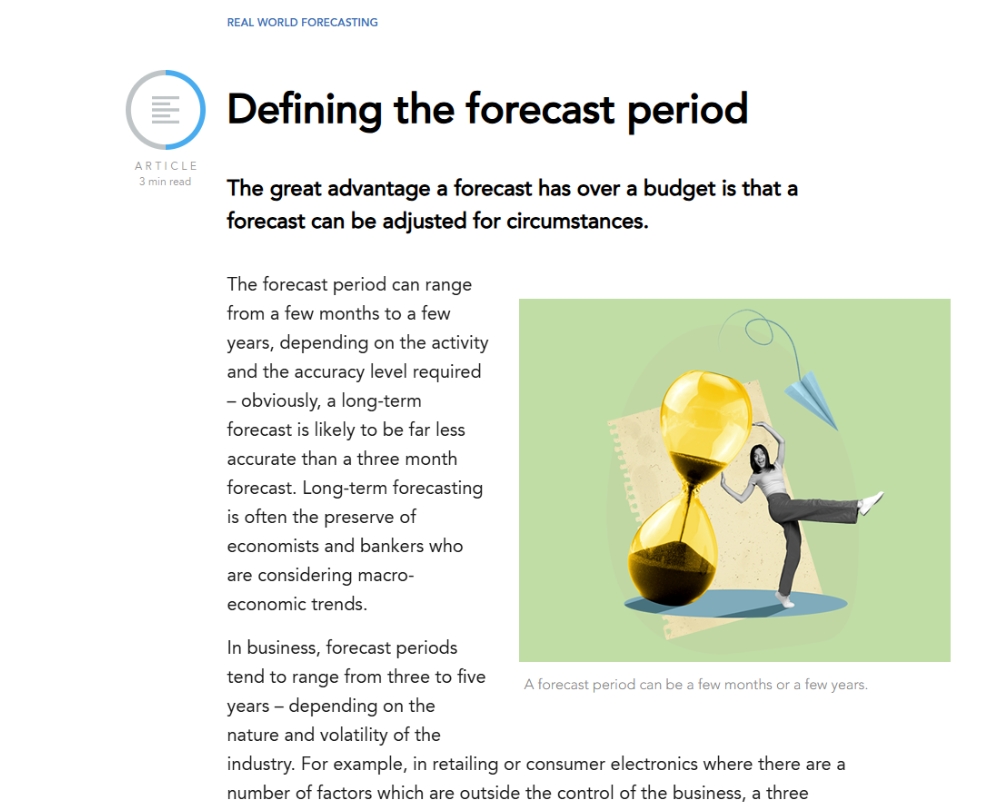
Defining the forecast period
The effect of AI
The dangers of complexity
Operational forecasting
Defining operational forecasting
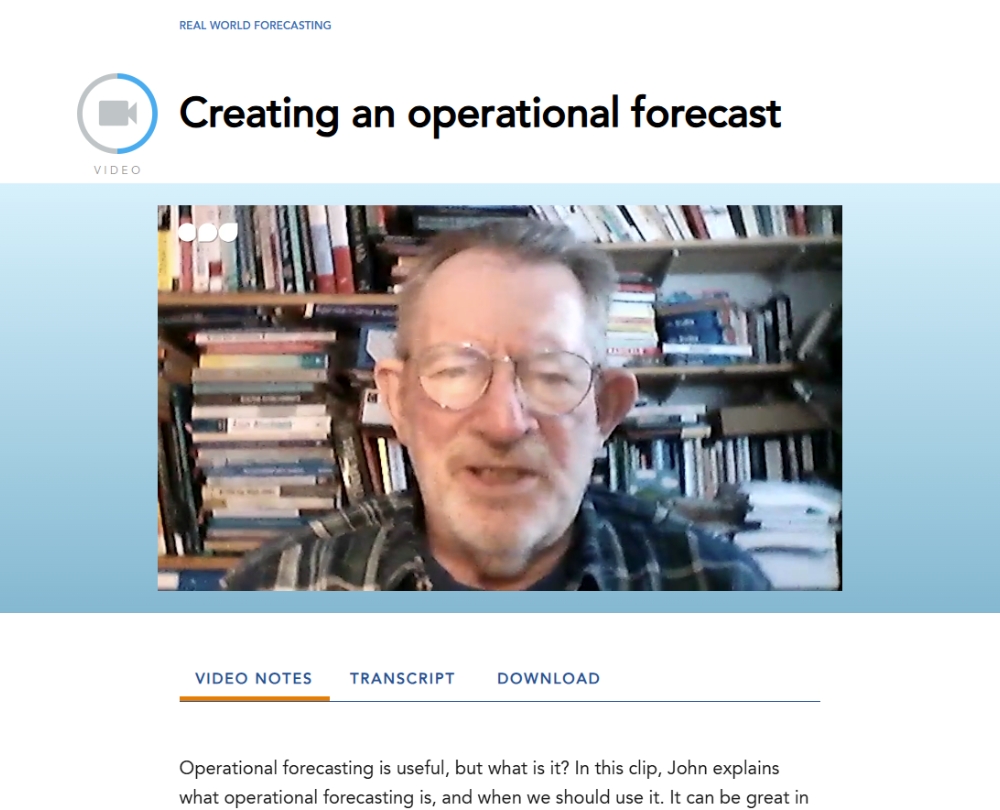
Creating an operational forecast
Demand
Assembling the data
Forecasting methods
Different approaches
Qualitative approaches
Quantitative methods
Time series approaches
Forecasting error metrics
Financial forecasting
An objective
Accurate forecasts
Identifying drivers
Raw data
The importance of ratios
Consider capital expenditure
Forecasting capex
Sensitivity analysis and scenario planning
Planning for uncertainty
Forecasting is not compulsory
When to forecast
Building forecast models
Keeping danger at bay
Scenario management
Dealing with risk
Key performance indicators
Decision-making
Making mistakes
Long-term forecasts
How it works
Author

John Taylor
John is a Chartered Accountant who has spent many years advising small and medium-sized businesses across the North of England. John is the author of two industry standard textbooks: Millichamp – Auditing and Forensic Accounting. He has also written several auditing textbooks for AAT courses.
You might also like
Take a look at some of our bestselling courses